The Slow Movement
Our lives these days move at a fast pace. Need hot food? The microwave does it in minutes. Need to tell someone something? A message does it in seconds.
And our response to this speed? We’ve taken a step back from it all and developed the Slow Movement.
The slow movement is not a new idea, and faster is not always better. The modern Slow Movement began with Slow Food, as a resistance against corporate fast food, and now many embrace the time it takes for flavours to come together in a dish that is greater than the sum of its parts.
Slow Knitting
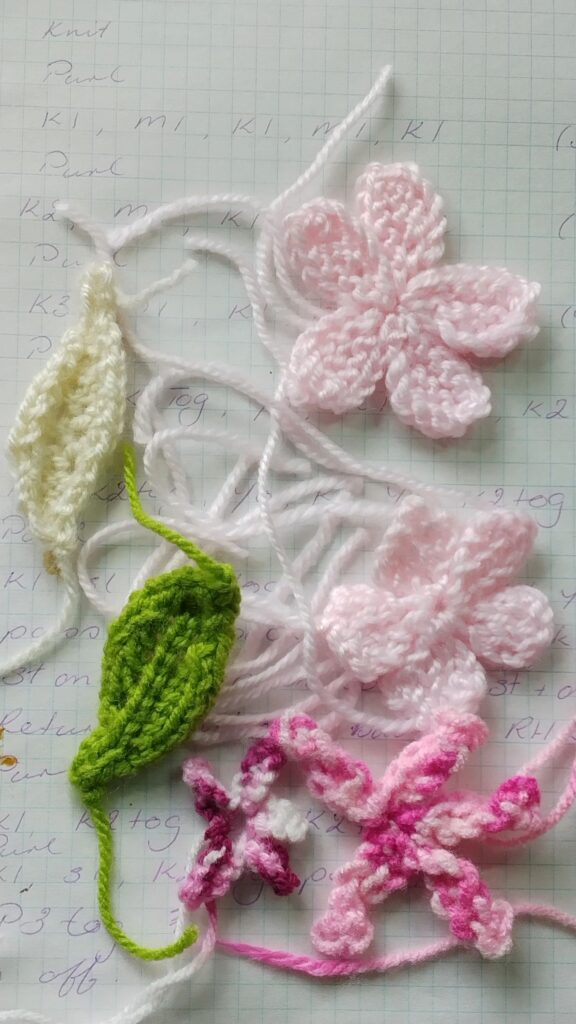
Applied to the fibre craft domain, this concept took knitting by storm with Slow Knitting being the intentional creation of knitted items, knitting for the process and not just the end result. The Journey, not just the destination.
Before I was aware of any of this, my own knitting journey turned toward knitting items that were smaller and smaller, to produce the article sooner. Hats, gloves and scarves became knitted flowers. The irony of this was that these small items had more intricate patterns and required more concentration and repetition to get them right. Before I knew it, I was creating flowers again and again, practicing until I got them right, producing sample after sample, with no end purpose in mind.
Intention, focus on the journey. The product becomes almost incidental. In fact, in an activity I like to call extreme slow knitting, I have heard of people who knit for the sake of knitting, using the ball of yarn to the end, then unravel it to start again.
Slow Stitching
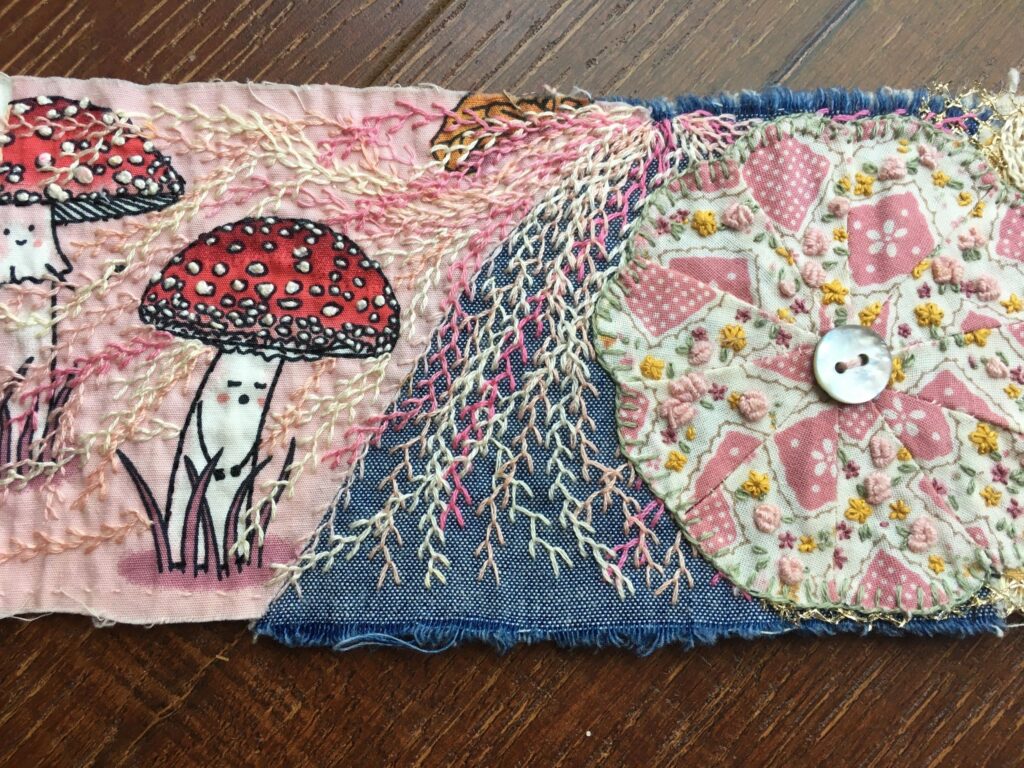
Slow stitching can also be done for the purely repetitive, meditative actions involved. In fact, sewing without the stress of having to produce a functional garment to a specified level of skill can free us from the concerns which might otherwise stop us from picking up a needle and thread.
Slow stitching does not require the experience and skill needed to produce a beautiful piece of technically correct decorative embroidery. Ironically, nine times our of ten, when you decide you have placed enough stitches of the fabric you are working you will be holding a thing of beauty, regardless of the level of technical correctness of your stitches.
And that’s the fun thing about slow stitching. You simply keep adding stitches to the work until you have enough. How do you know you have enough? You know you have enough when – well, you just do. No rules, no right or wrong.
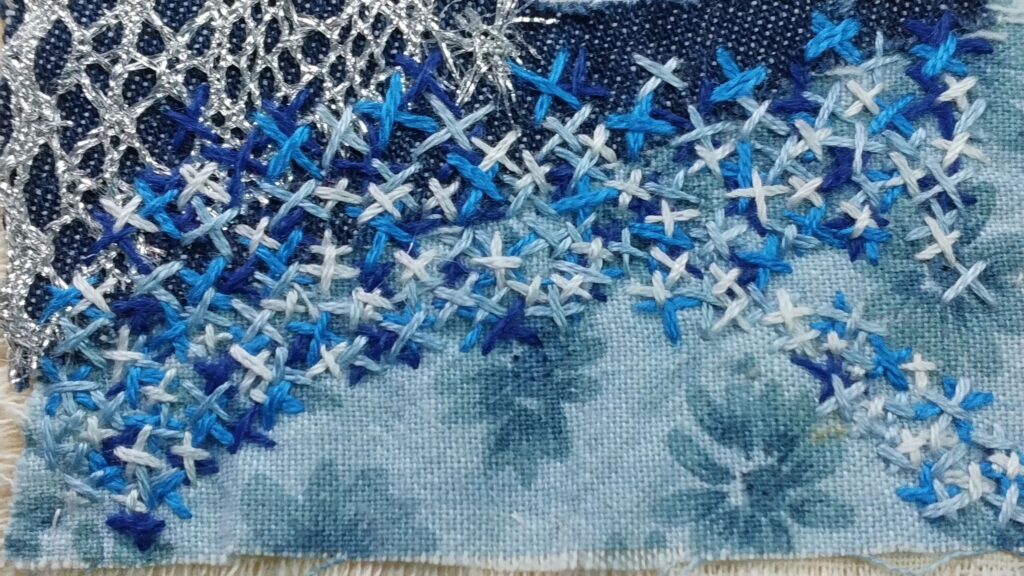
Later you might look at the work and decide to add something more, and that’s perfectly all right. Slow stitching doesn’t need an end point, because it doesn’t need a function. It doesn’t even need to be decorative, although it often is.
You might start with an inspiration or direction, or even an end point in mind. But as you place your stitches in the fabric and your ideas develop, that direction can change and you have the freedom to choose a new end point.
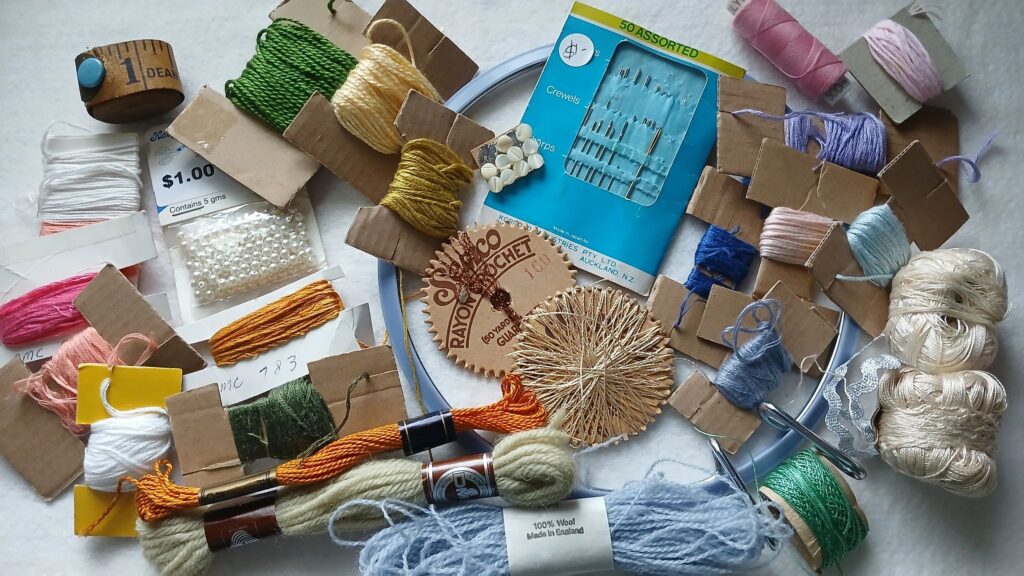
Slow stitching doesn’t require fancy equipment or materials. Many of the notions used may be found in thrift shops, where other crafters have de-stashed. Fabric may be taken from discarded garments. Natural items such as sticks or shells can be incorporated into projects.
Soon, we will be launching a series of slow stitching projects based one just one stitch - running stitch. We hope that this approach makes our stitching projects accessible to anyone who cares to pick up a needle and thread, and a few pieces of fabric.
Slow stitching is a safe place to play and practice with needle and thread. And if you find you enjoy the action of making stitches, there are resources that can help you take your stitching journey wherever you wish. And if nothing else, your work will be a reminder to take a moment in this fast-paced world.
Learn how to hand sew using our video tutorials.
See our web pages with instructions of common and useful hand stitches.