When we started talking about threads, it got me thinking about sewing with other things, which brought me to leather. Sewing with leather has a long-standing tradition, but doesn't immediately come to mind when you are discussing hand sewing and embroidery techniques.
This train of thought took me to little leather purses my mum used to make when I was small, as gifts and items for sale at school fetes.
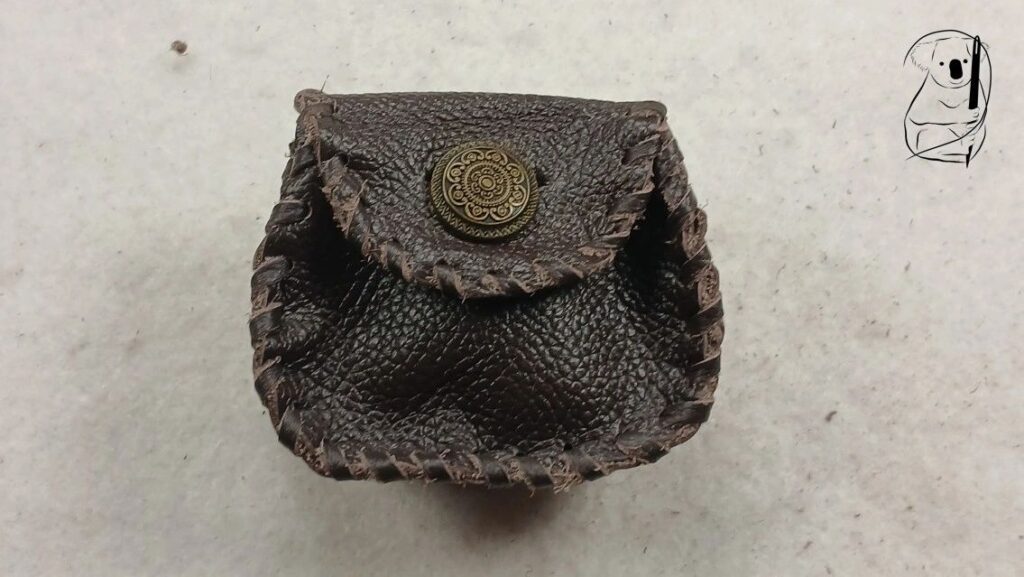
These little coin purses were a simple envelope design, laced up the sides, a few little beaded flowers on the flap and a press stud closure. I know there is still a bag of these purses, half constructed, somewhere in the house, but their hiding place eludes me.
So, instead of finishing one of Mum's, I forged ahead and made my own from scratch. This design is very simple, and I have made these in felt with a lunch-time sewing group at a local school.
The leather came in a bag of good-sized off-cuts from a thrift store. What I didn't have was enough lacing to stitch the pieces together.
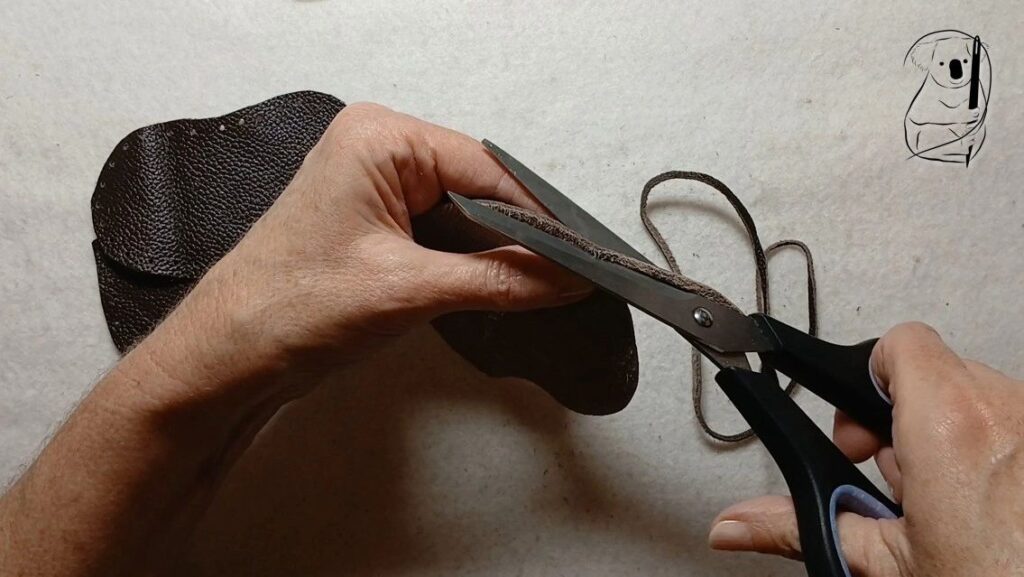
So the next thing to do was to learn how to make leather thonging from a piece of leather. There are special tools you can buy to do this, but a pair of scissors carefully wielded does the trick admirably.
The key here is to cut the leather in a spiral to give you a continuous strip, longer than the length of the piece you have. Pretty ingenious if you ask me.
Long strips can be produced from relatively small pieces of off-cuts. There are further steps to process the leather strips so they are smooth and pliant. I confess, I skipped these in my haste to complete my project and paid the price of mess. Next time.
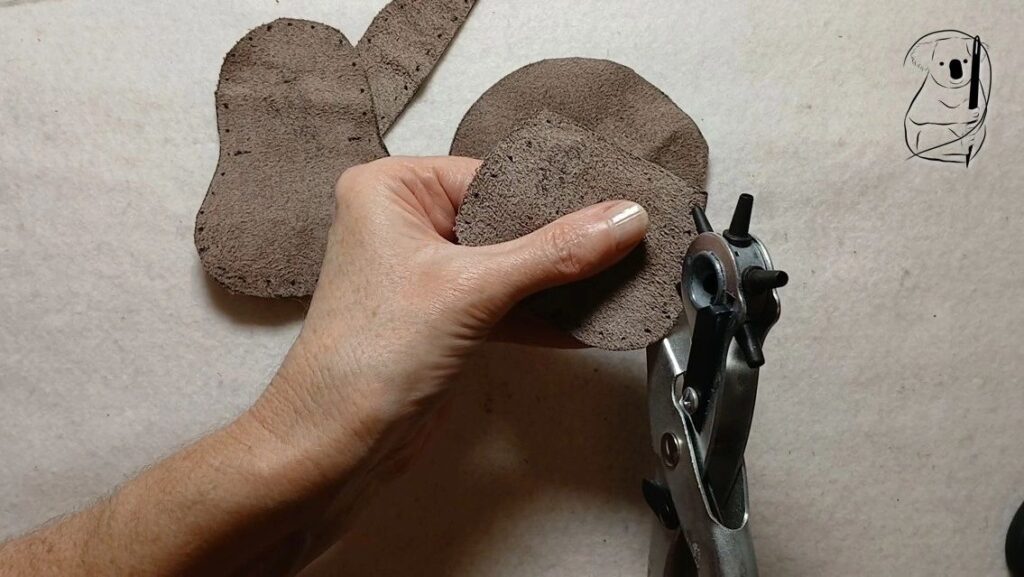
One of the tools I used to complete this project is a little outside of the usual sewing basket, but these adjustable hole punches are easy enough to find.
Commonly used to punch new holes in leather belts, the tool cuts the leather so it is less likely to tear when you are stitching it together.
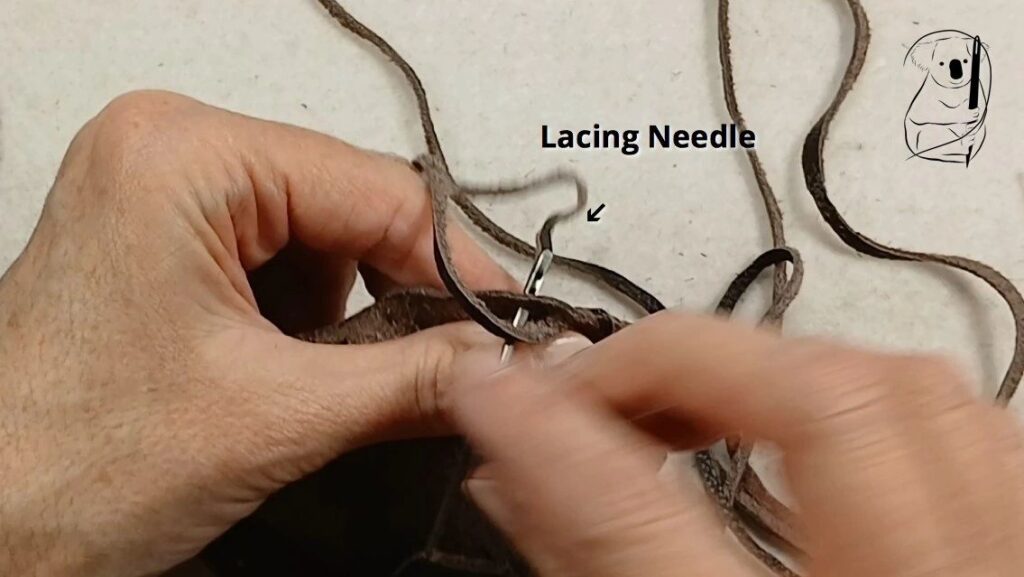
Another less common tool used here is a flat leather lacing needle.
This needle grips the leather thong at one end, eliminating the bulk of having the leather thong folded through a needle eye.
These needles are a little tricky to load, needing a minimum of three hands.
An extra tip that I didn't know is that once you have your leather thong in place, a gentle tap with a mallet helps to keep it there. (If I had known this, our Blooper reel for Series 3 would have been shorter.)
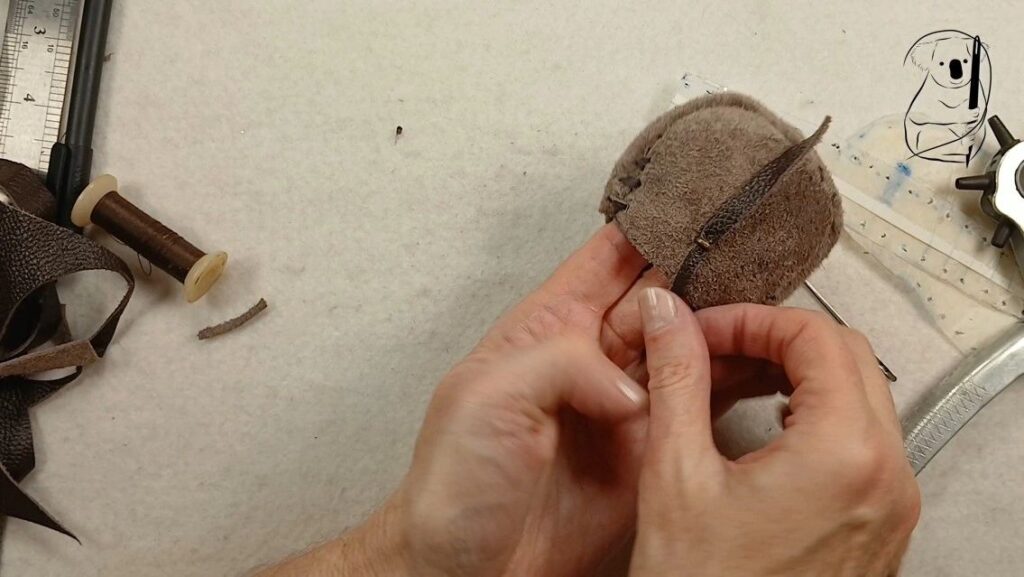
Wanting to keep the project materials within things that I had to hand, I rummaged through a button jar for the closure.
When I found the button that I used for this purse, I knew it was the perfect one, but I was unsure about sewing a shank button onto the leather without any reinforcement, and how much the button would wobble around.
In the end, I decided to make a hole in the leather just large enough for the shank to fit through, and then pulled a wedge of leather through the hole to secure the button.
I'm pleased with this result, as the button is secure and stable.
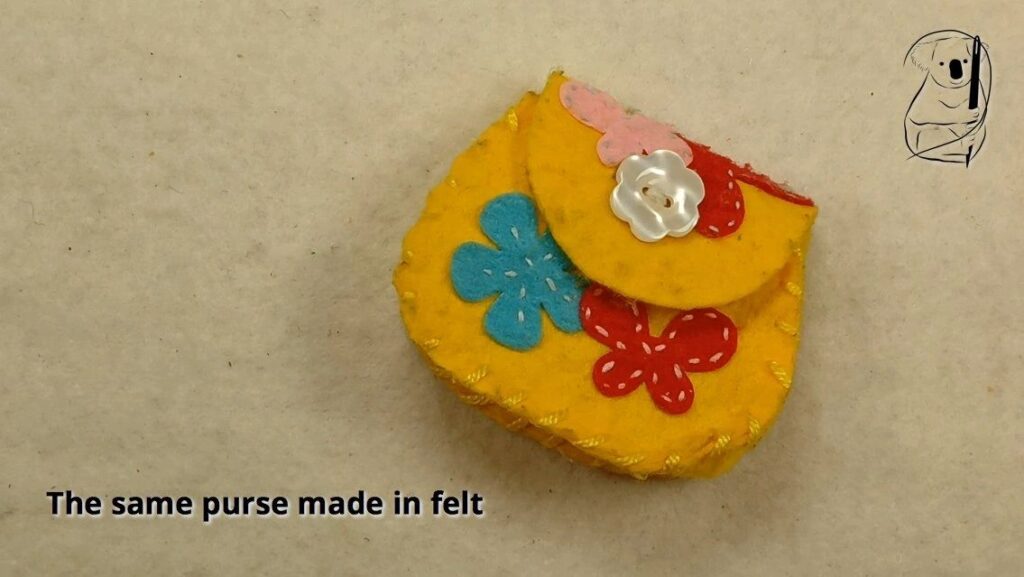
As mentioned above, I originally made these purses many years ago in felt, and this one now houses my thimbles.
As a children's project, they can be constructed without the addition of the gusset. This makes a smaller pouch, but would be a lovely gift bag for a pair of small earrings or similar.
The leather off-cuts are quite soft and probably jacket-weight, but because you are punching the holes rather than trying to put a leather needle through, you could make this purse from upholstery grade leather too. The bag of scraps was $5 at the local op-shop and because the pattern pieces are all quite small, I had no trouble finding a piece large enough for all the pieces.
While I love stitching with threads and fabric, branching out occasionally into something a little different can be very enjoyable.
Watch making Casey on YouTube.
See our Threads, Threads, Glorious Threads video, and have a look at many of the other options that are available for stitching.