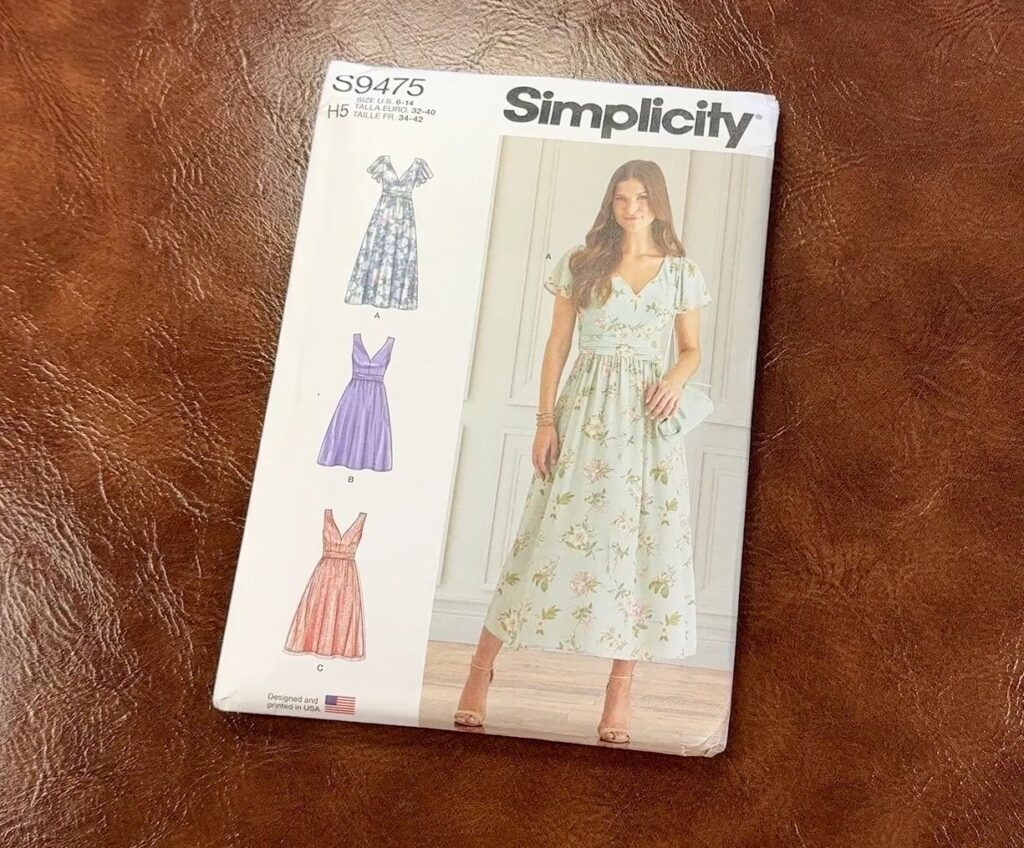
This is a major project which will result in a lovely long evening dress, embellished with beads and embroidery. We are taking a Simplicity pattern and making a few changes to tailor it for the special occasion.
We will lengthen the skirt to make it full length and we are working the bodice 2 ways. One way will have a embroidered diamond pattern on the bodice with beads sewn into the intersecting lines of the diamonds. This is the one which I eventually choose to use in the finished dress. The other bodice will have sequins sewn onto it. All these embellishments are things we have covered in our previous videos and are suitable for the beginner. The pattern is not difficult and there are good instructions in the pattern itself to follow through step by step until the garment is completed.
The first video in this series brings to discussion some considerations to be taken into account when choosing the pattern of your dress, and in choosing the fabric to purchase.
Which comes first - the pattern or the fabric? I always walk into a fabric shop and become instantly drawn to the fabrics. But our first consideration should be how will this garment be used?
Do I require it to allow for a lot of movement?
Will the weather be warm and if so will the fabric breathe and be comfortable?
Will I be comfortable wearing this garment for hours?
If I eat a meal wearing this dress, can it stretch a bit to remain comfortable?
If movement is required a knit fabric would be great, or a loose fitting dress. If the weather is warm, a natural fibre may be more comfortable.If you are wearing a dress for a long time, will creases become noticeable through the evening.
Also consider that a full length dress will weigh more than a shorter dress. Some of the fabrics we look at are heavier than others and overall weight may be a consideration.
There is a lot of information on the packet sleeve and in the enclosed instructions. Read it all carefully. There is a glossary of terms in the instructions, which should explain most of the construction process.
I was surprised to see that Slip Stitch is advised in the instructions, but a description of this stitch is not in the glossary. We prepared a quick video on Slip Stitch because of this. But if you find that the instructions are a bit light on detail, don't panic! There is a Simplicity website with lots more information and the Slip Stitch details are contained there.
Similarly, the instructions advise to lengthen the skirt using a line on the pattern for lengthening or shortening the pattern. Unfortunately, this line is not actually on the skirt pattern piece. I have devised my own method to lengthen the skirt in the second video in this series.
You should consider that in some patterns, such as a straight skirt, the omission of a lengthen or shorten the skirt line, may be deliberate as a longer version of a straight skirt, for example, would not work very well.
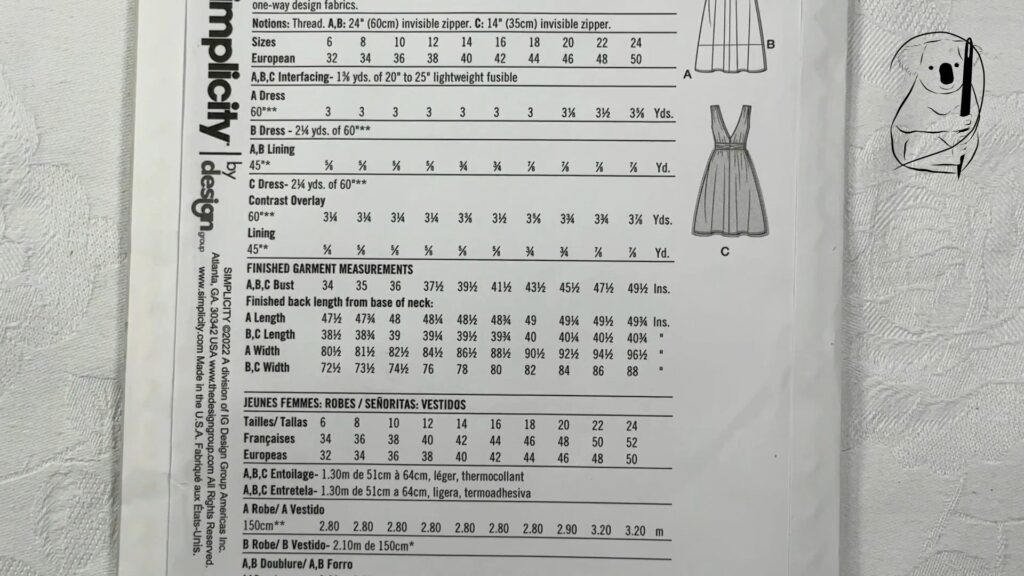
I will quickly mention the width of the fabrics found in the stores. While the patterns indicate that fabric widths of 60 inches or 150 cm should be purchased, you probably won't find these widths in dress fabric bolts. You may find these widths in furnishing fabrics but not dress fabrics.
The patterns seem to understand this and I was advised by my store to simply purchase the length of fabric indicated on the pattern sleeve.
I purchased extra fabric for my dress anyway as I was lengthening the skirt plus making 2 bodice pieces for the project. When in doubt, I would recommend pinning all the pattern pieces to the fabric before cutting the fabric. If that is not possible, cut our your largest pieces first.
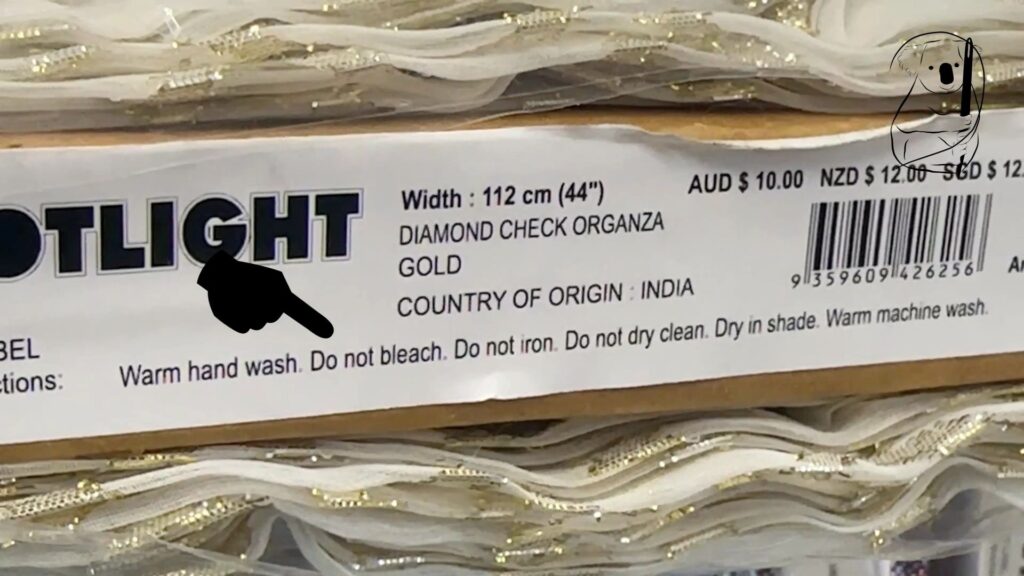
If you don't have an overlocker to trim your fabric edges, you may find a fabric which resists fraying such as crepe or charmuse. The pattern used encloses most of the fabric edges within the lined bodice. The beading will make the dress hand wash only so I did not overlock the edges of the pieces above the waist. However the skirt will be constantly moved against the legs and possibly seats. I did overlock these skirt edges to make the garment more durable.
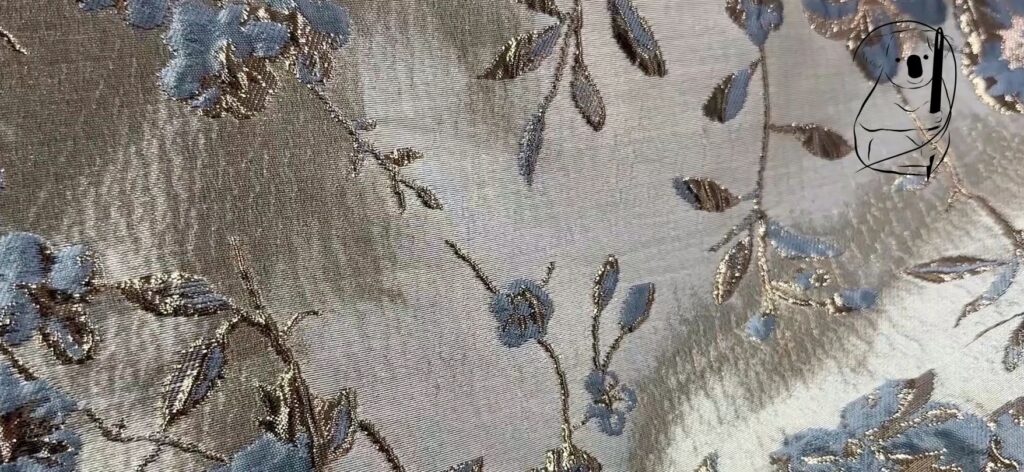
I will briefly talk about the fabrics which were recommended on the pattern. Some were completely unavailable in my store mainly because they were made from silk and the demand for silk fabrics belongs in smaller specialty stores such a those specialising in bridal fabrics.
Fabrics such as Brocade and Taffeta are quite heavy and stiff. They are good at holding a shape however in the pattern used here, we want the skirt to hang down and be gathered. A stiffer fabric when gathered may have a tendency to stick out from the body making your silhouette wider and thicker than normal.
These fabrics may be better at pleating than gathering. Also, they are substantially heavier in a full length dress than some of the other options.
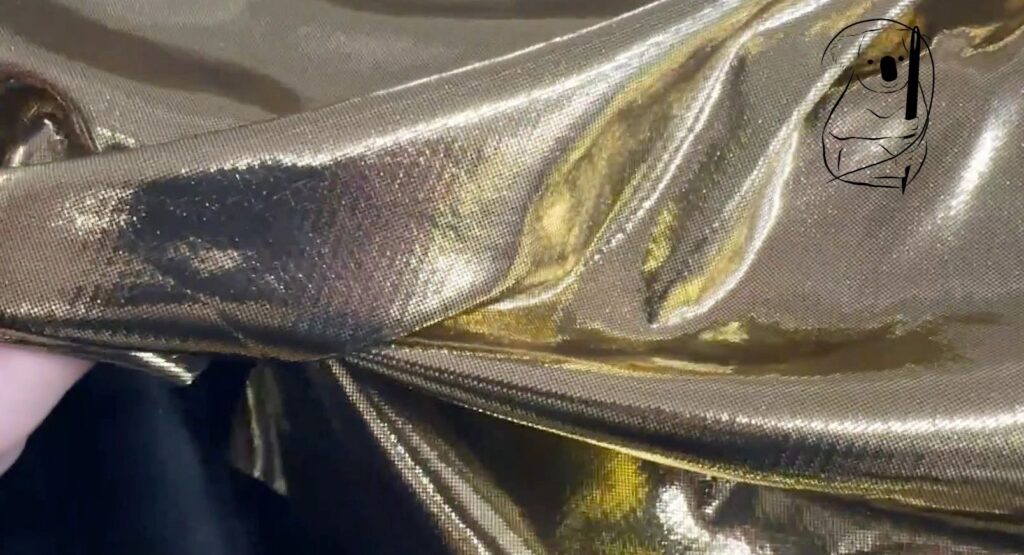
The lame in the image above is gorgeous and has many of the qualities we look for in an evening dress. It has a little stretch which would be great for movement and has some give in it so sewing it might be pretty easy. The drape here is very nice a the light reflects off the fabric so easily. However a fabric like this may be hot to wear. It is made from man made fibres and would be great for a cooler evening.
I will also make a comment on the cotton blend fabrics recommended by the pattern. I found almost none of these. There are a lot of pure cotton fabrics and pure polyester fabrics but a real scarcity of the two of these being blended. If you do find some blends you like, remember that the high cotton content of the fabric, the more likely it is to crease.
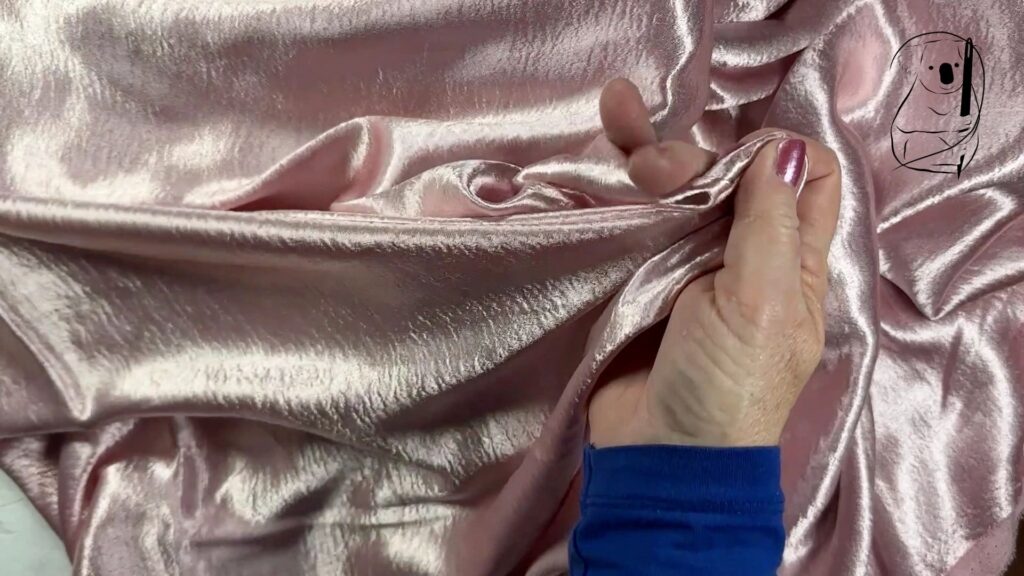
The image on the right is the pink version of the blue fabric I actually purchased. Having several colours in a type of fabric that feels good offers an opportunity to pick a colour which complements your complexion without compromising on the feel and texture of a fabric you love.
Hold the fabric against your face in front of a mirror to see if it washes out colour from your skin or enhances it. Some colours like yellow, are particular culprits in this regard.
I mention perspiration marking garments with damp patches. If you need to avoid damp patches showing up on your garments, you might want to consider white or black colours and a fabric such as crepe.
Watch the second video in this series for tips and techniques in the construction of the Prom Dress.
Watch the Video - Let's Make a Prom Dress 1 - Choosing the Pattern and Fabric - Skye
Watch the Video - Let's Make a Prom Dress 2 - Tips to make your Dress - Skye
Watch the Video - Let's Make a Prom Dress 3 - Adding to the Dress - Skye
Watch the Video - Let's Make a Prom Dress 4 - Accessories for the Dress - Skye