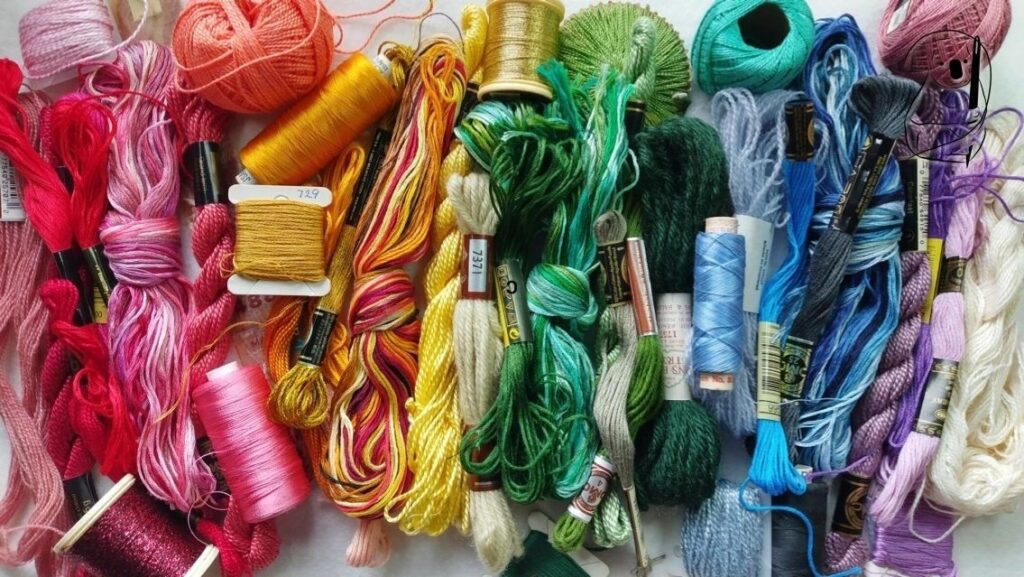
Without something in the needle, there is no stitching, as seen in our Blooper videos. But there are plenty of threads to choose from and the choice of thread is part of the expression in stitching. If the stitches are our alphabet, the threads are our brushes.
Threads vary not just by colour, but by fibre content and structure too. And these differences are all part of the consideration when planning a piece of sewing, as they change how each thread performs.
Watch our video Threads, Threads, Glorious Threads to see these threads in action.
Ways to describe threads
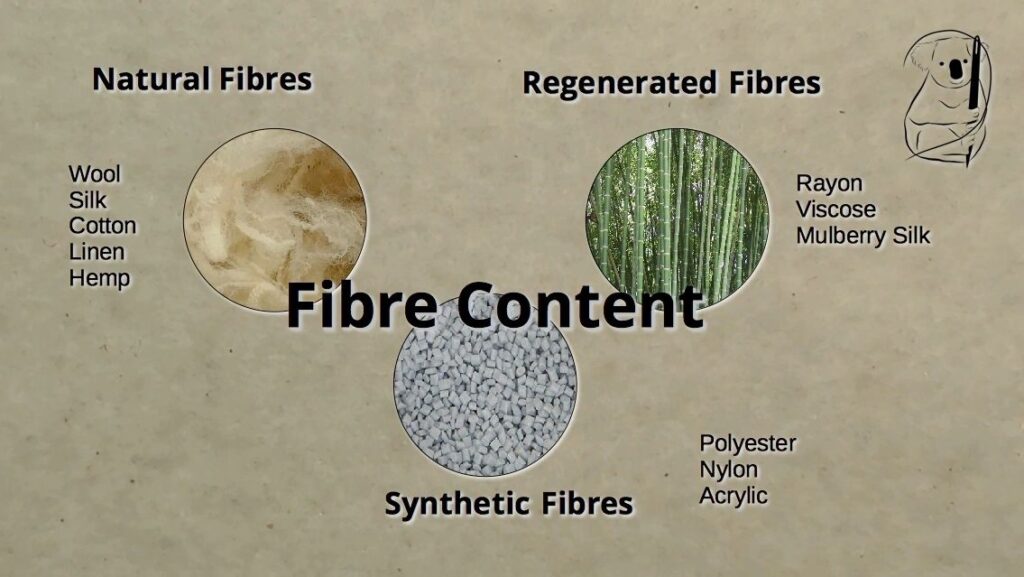
Fibre Content - Natural, Synthetic, Regenerated
The fibre content of thread can be divided into three types - natural, synthetic and regenerated.
Natural fibres include cotton, wool, linen, silk and hemp and grow as parts of plants or animals.
Synthetic fibres include polyester and nylon and are created from petrochemicals.
Regenerated or semi-synthetic fibres consist of naturally occurring material that is processed to produce a fibre.
Threads are produced using a single type of fibre eg 100% cotton, or with a combination of fibres eg cotton-polyester thread.
The fibre content of the thread can change how it behaves when stitching, and also affects the care of the finished item.
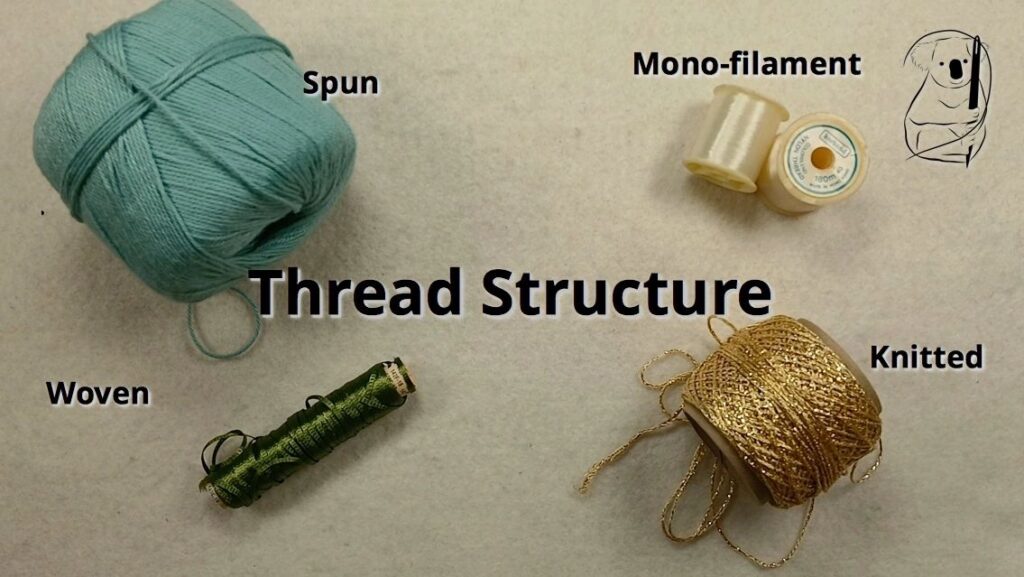
Stucture - Spun, mono-filament, knitted, woven
Most threads we come across are spun, which means that the fibres have been twisted together. This is done because the fibres that make up the thread are too short to be used individually, and this creates a strong, useful length of thread. When these threads are added together, referred to as ply, they make a thicker, stronger thread. Some threads, like stranded embroidery floss, are designed to be separated before use, but others are not.
Synthetic fibres can be manufactured as a single, unbroken fibre, called a mono-filament. Like fine fishing line, an example of this is the clear thread used for hemming that always seems to come undone at the least appropriate moment.
Another structure is the knitted thread, where one or more finer threads are knitted into a very fine cord. Care needs to be taken when handling these threads, as pulling on the wrong end can cause them to unravel. These are more commonly found for knitting and crochet, but in this world where you can stitch with anything, those boundaries are blurred and they get included in all manner of stitching.
Ribbon threads are woven, and the style of weave contributes to how they behave when stitched, as well as their fibre content.
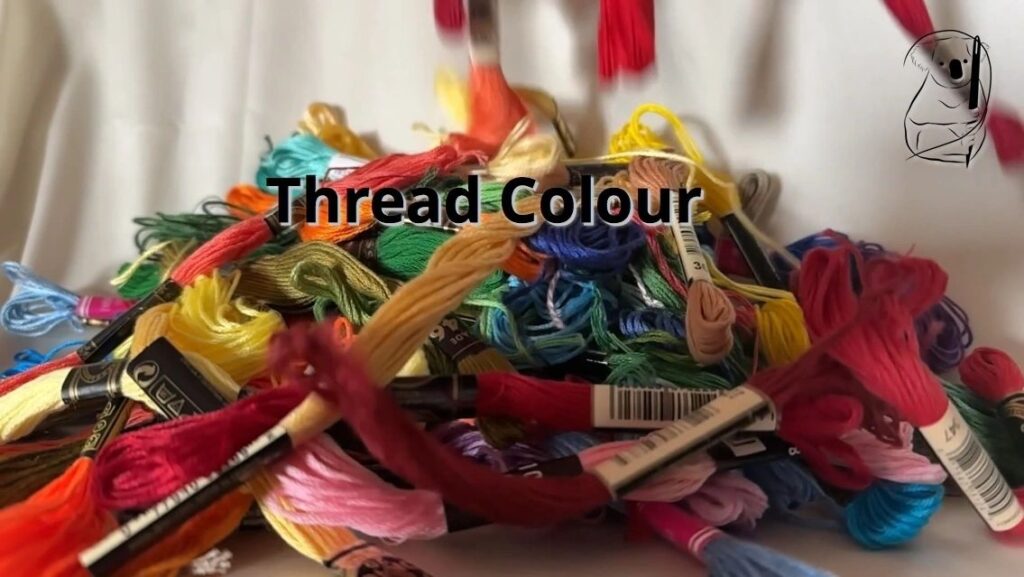
Colour
The rainbow of colour that is available in embroidery threads is vast, and colour choice is as important in stitching as any other decorative art.
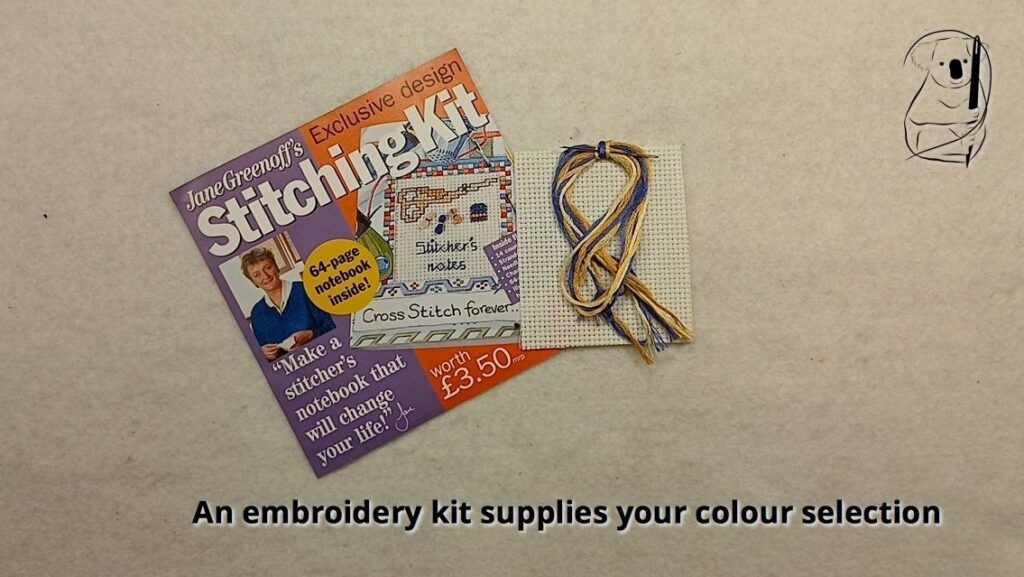
If you feel overwhelmed by the choices available, a kit might be a good place to start, where the colours have already been chosen and provided.
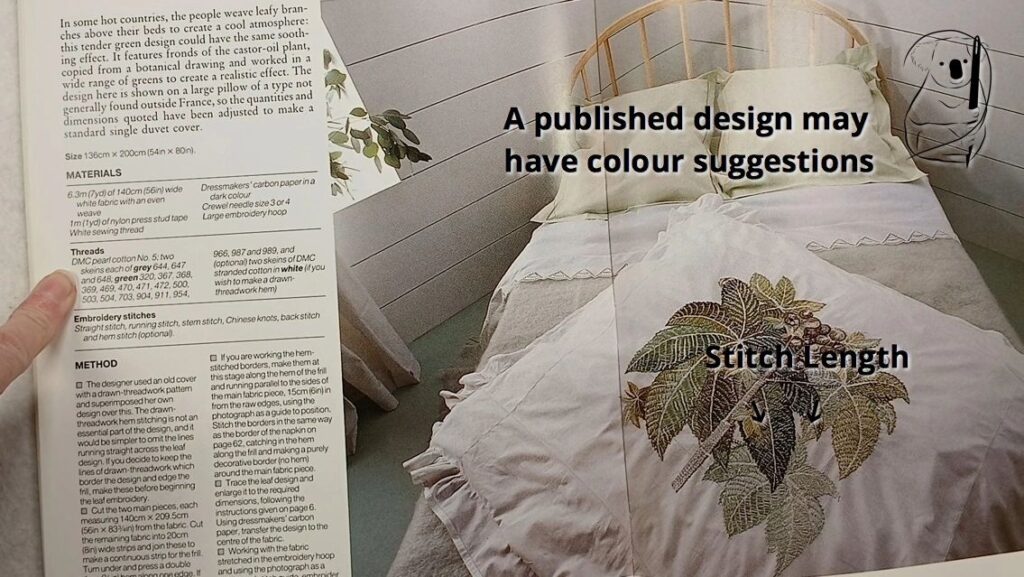
Many beautiful instructional books on embroidery provide colour suggestions with their designs and patterns. These are a handy guide, especially if you have your own threads the choose from.
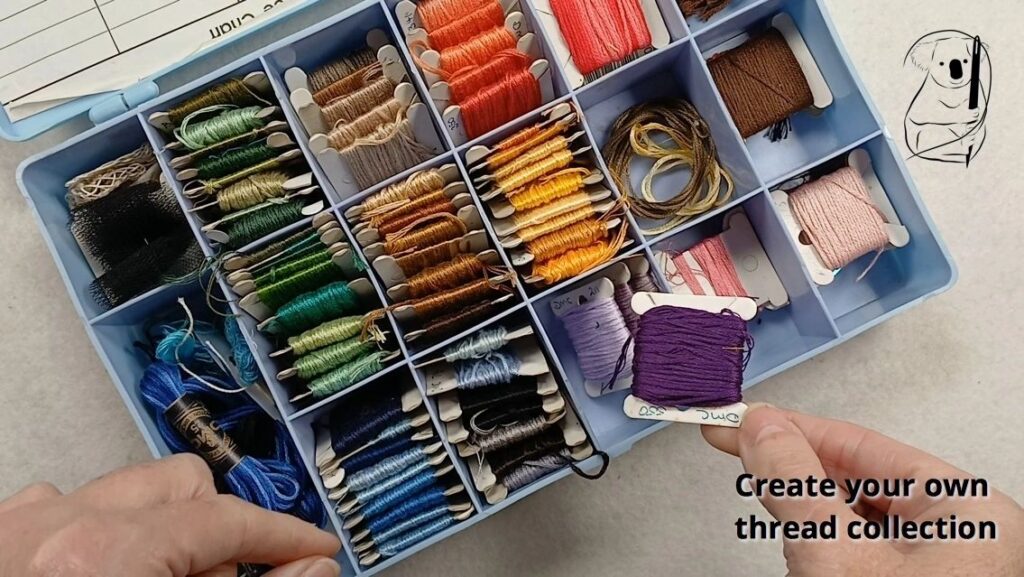
Once you have your confidence with colour selection, you can gradually build your thread resource to meet your stitching needs and choose the colours yourself.
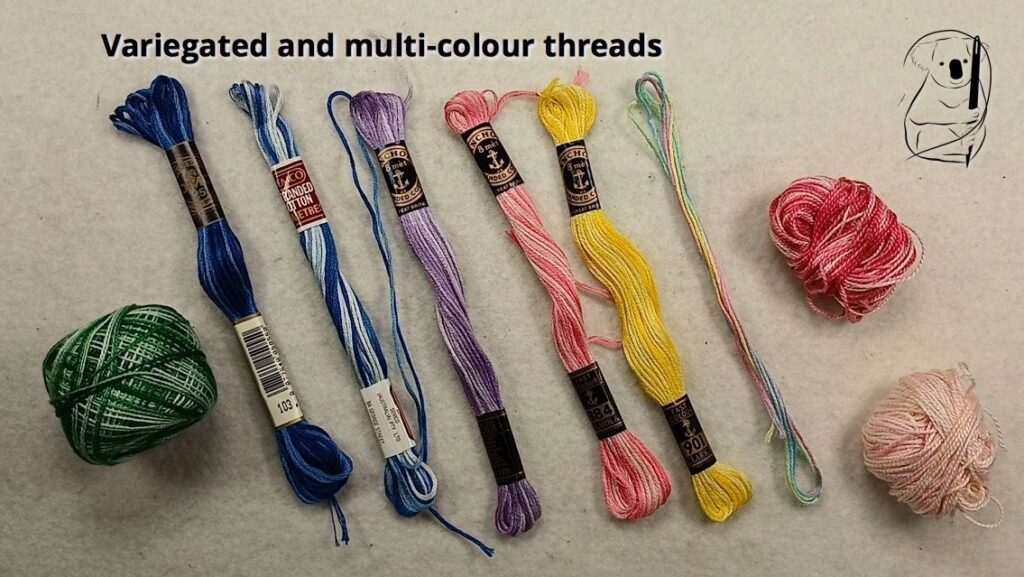
And the joy of colour doesn't end with solid thread colours. Threads also come in variegated shades of a single colour, and multi-colour tones, where the colour gently shifts along the length of the thread. Boutique hand-dyed threads offer a great opportunity for self-expression in your stitching.
We use a varigated colour-changing thread in pastels for the seed stitch project Gabrielle.
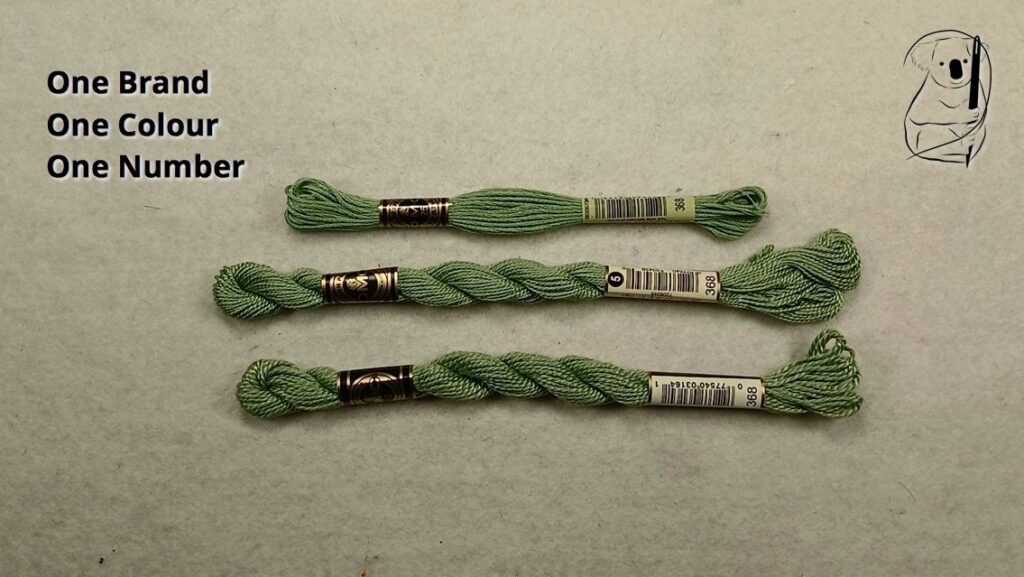
Most thread manufacturers use numbers for all or part of their naming of colours. Each manufacturer has its own numbering system and the numbers will be different for similar coloured threads. But within a single brand, you can usually expect the numbering system to be consistent throughout the range of thread types that are produced.
For example, the DMC cotton threads will all have the same number for the same colour.
Note that across the ranges, not all colours will be available in all thread types.
Types of threads
Threads have evolved to suit specific purposes, combining the elements of fibre and structure and processing to give them different properties that change how they behave on the fabric. So, let's meet some of the threads that are available, and find out what makes them popular and appropriate for specific uses.
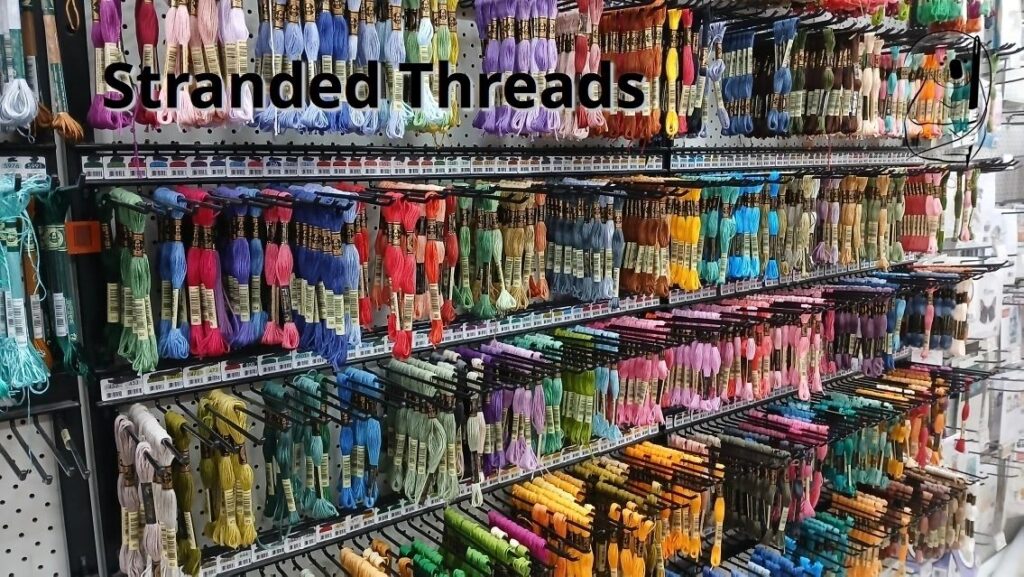
Stranded Embroidery thread
The stranded embroidery threads usually come with 6 strands of thread, loosely twisted together, and presented in a skein of about 8 metres. This is probably the most popular type of embroidery thread, and by far the most popular version of this thread is cotton, which has been treated to improve its lustre and dye uptake with a process called mercerising. Widely used in cross stitch and free style embroidery, the cotton floss has the biggest colour range on the shelf.
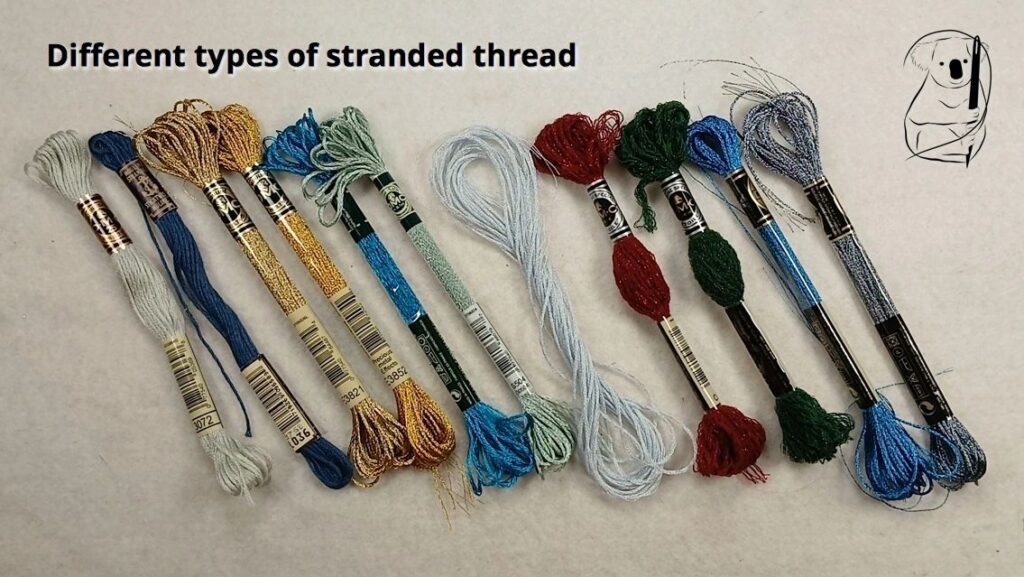
Stranded floss is also available in silk, rayon, metallics and sparkly threads. Metallics and sparkles are often used as highlights in the embroidered work, where a contrast in texture brings added dimension.
See our Threads video for the special threading technique suggested for when you use the sparkly or metallic threads.
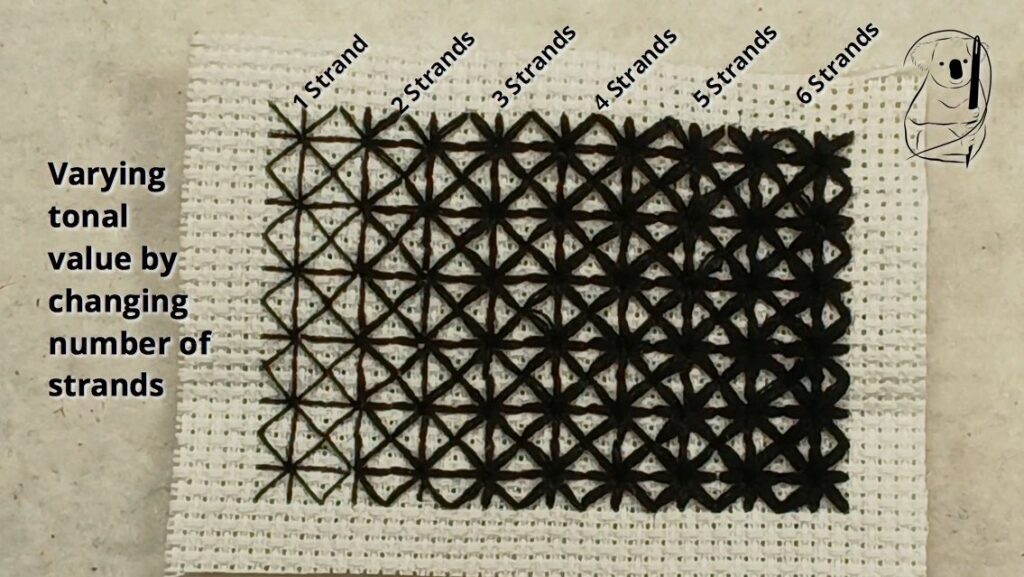
One of the delights of using stranded threads is that you can vary the tonal values of your stitching by simply changing the number of threads you use to sew.
This is demonstrated in our Stem stitch project Dylan, where the external lines use more threads than the internal ones, giving them more emphasis.
Stranded embroidery thread is cheap, readily available and versatile. There is no wondering at its popularity in the stitching world.
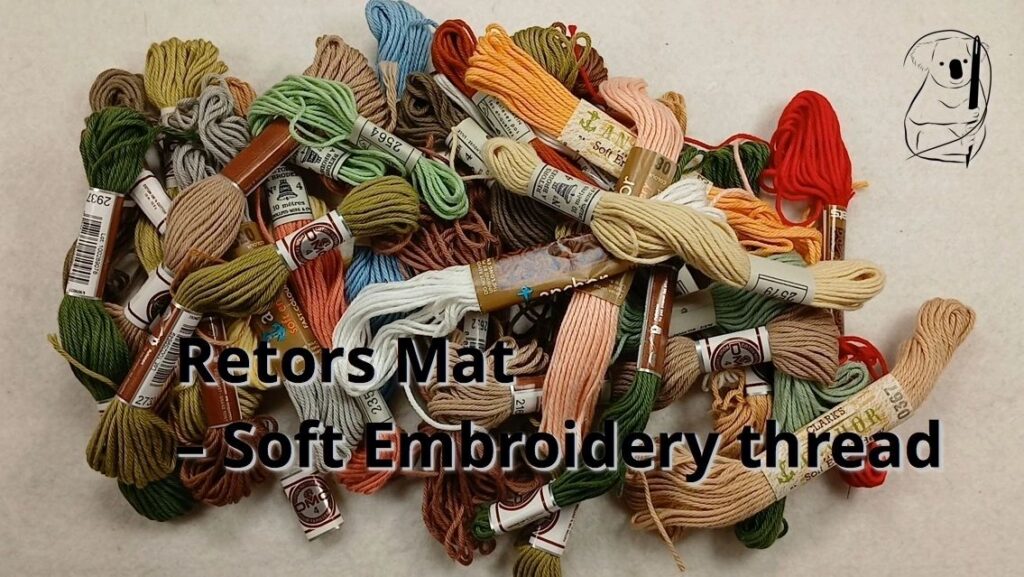
Retors Mat - Soft Embroidery Thread
This is a soft embroidery thread which is quite thick - thicker than 6 strands of floss - and has a matte finish, although it is not fluffy. Often used for stitching tapestries, it is a lovely thread to sew with, and its thicker width lends it to bold designs. This is a 5 ply thread, and it should be used as a single thread. If you try to separate it like stranded cotton, the fibres will pull apart as you sew, and break your thread. Our Stem stitch project Josie, uses these threads to give a soft, very textured finish.
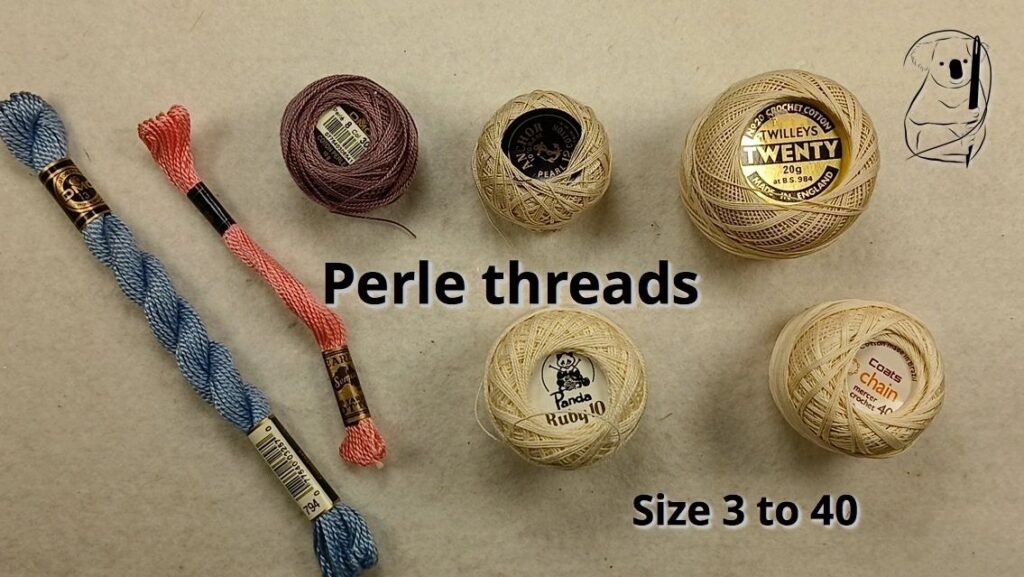
Perle
Perle threads have a strong twist that gives a bumpy or rope-like appearance to the thread. Its high sheen and texture make it a popular choice for embroidery, and it comes in different thicknesses to match the project.
Perle threads are also popular for other fibre crafts, including crochet and lace making.
It is available in skeins and balls. The range of colours available varies with thread thickness. The thicker embroidery threads have quite extensive colour ranges, while the finer threads, used mostly for crochet, have fewer colours to choose from.
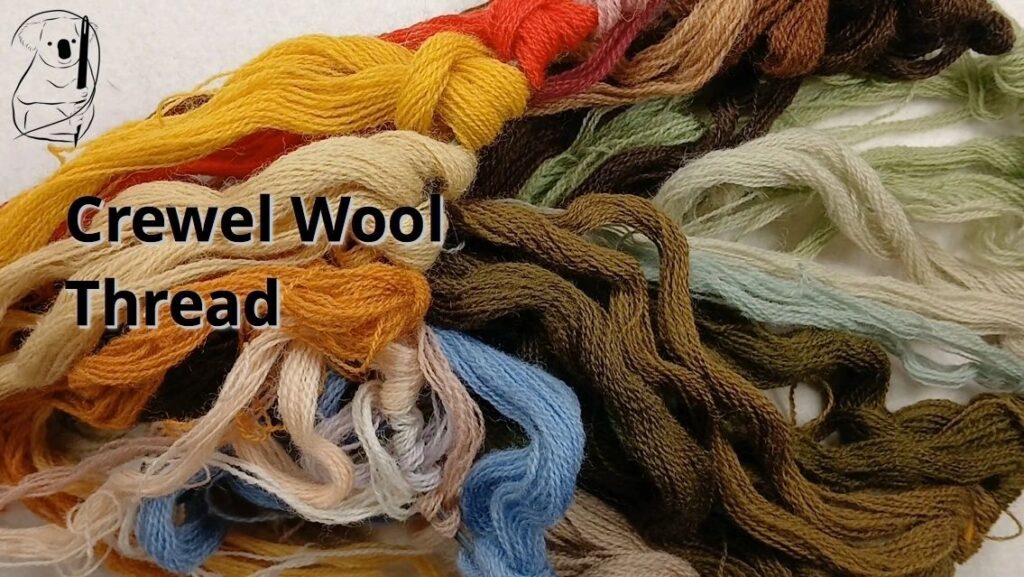
Crewel Wool
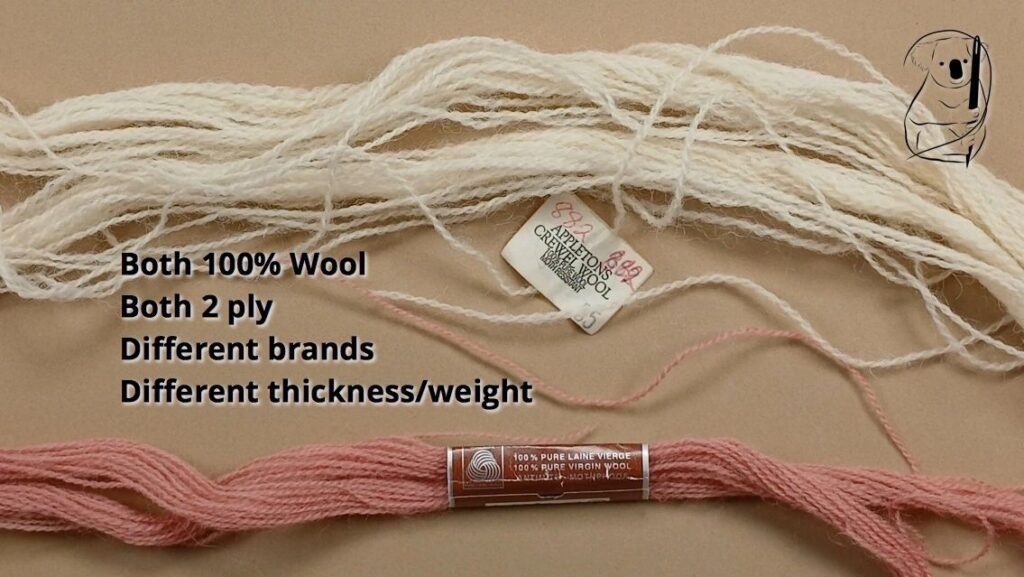
A 2-ply twisted thread, Crewel wool threads give their name to Crewelwork embroidery, popular during the 17th Century, and revived in the latter half of the 20th Century, popularising many of the stitches used in surface embroidery today.
The weight of the threads can vary noticeably between manufacturers, so this should be kept in mind if you are mixing threads.
The woolly texture can add a great contrast when used in freestyle surface embroidery with other fibres. Crewel wool is easy to stitch with, and it makes great little sheep – see our French knot project – Jacques.
Sashiko
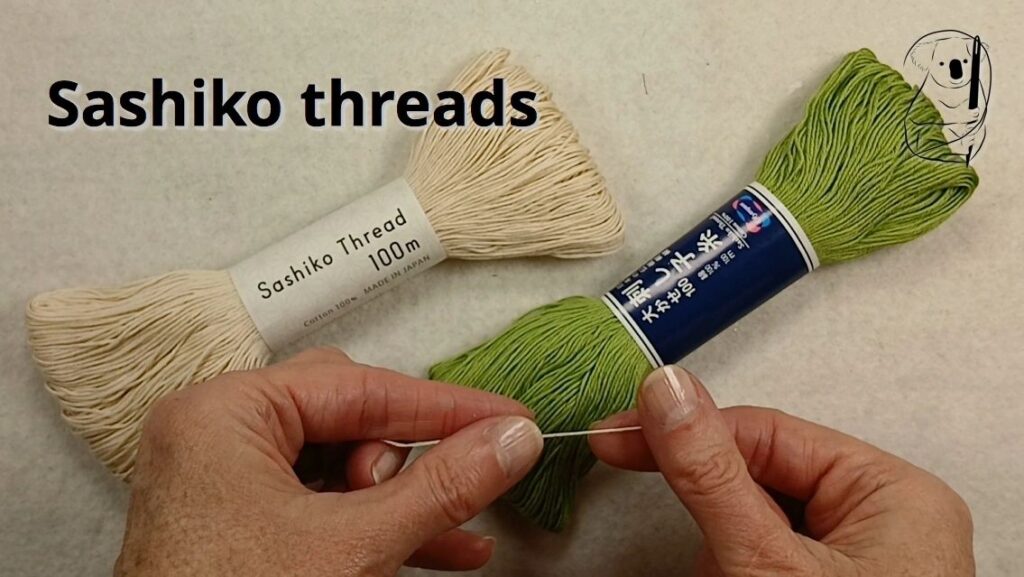
Sashiko threads are usually a 4- or 6-ply cotton thread that is twisted and non-divisible. The threads have a matt finish, as the thread is not mercerised. Their thickness varies from brand to brand, so it is best to use just the one brand and type if you require a consistent appearance in your project. The matt finish of the thread helps it ‘grip’ the fabric, and hold the layers together. See our playlist of Sashiko style stitching on YouTube for some inspiration.
Ribbon threads
Once I thought there was only one type of ribbon available for embroidery, but like every other category, there are multiple options available.
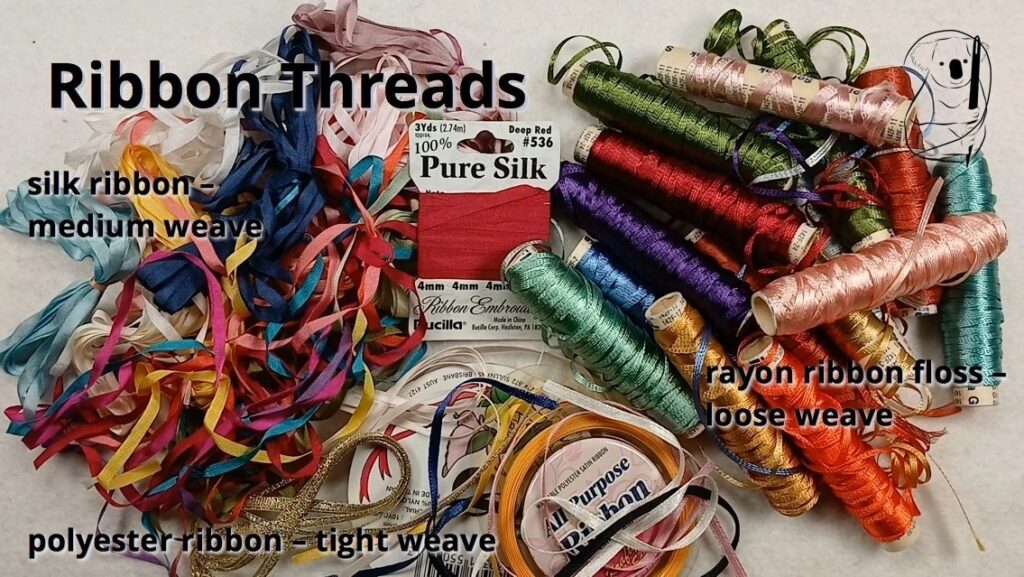
Silk ribbon has a firm weave, and is soft and pliable. It is available in a variety of widths and is popular for hand-dying. The width of the ribbon adds variety to the shapes produced by your stitches, and Silk ribbon embroidery is another very popular branch of surface embroidery. To keep the ribbon threaded on your needle, there is a special threading technique for silk ribbons too. See our Threads video for a demonstration.
Ordinary polyester ribbon can be used for embroidery. It will be stiffer than its silk counterpart because it has a very tight weave, but may be more readily available. The trick to successful sewing with this ribbon is finding the right sized needle. Have a look at our video on testing whether polyester ribbon can be used for surface embroidery. The results are very interesting for such an inexpensive medium.
Ribbon floss is another beast entirely in the ribbon thread world, where strands of rayon thread are loosely woven into a flat braid. The braid construction makes it very pliable and the rayon fibre is shiny. We use ribbon floss to create the leaves in our detached chain stitch project Daisy.
Novelty threads
When working on a surface embroidery project, it can be great fun to introduce elements that might not ordinarily be considered. Simplest among these is novelty threads.
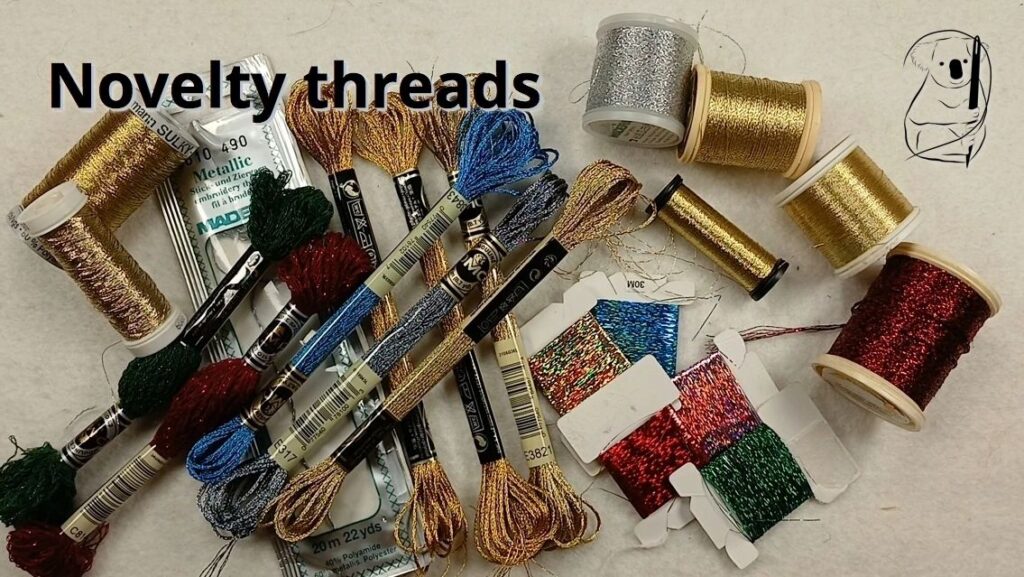
Goldwork, or working with metallic threads, has a very long tradition especially in ecclesiastical needlework. These days, metallic threads are widely available and much less expensive, not being actually made of gold. Metallic threads can be tricky to work with and shorter lengths of thread and the correct needle size (one that will reduce the friction as the thread goes through the fabric) will make using them easier. An alternative to sewing through the fabric may be to couch the metallic thread onto the surface of the fabric with another thread. Have a look at our running stitch project Evie, where we add some gold thread to a simple but very effective decoration for a pair of jeans.
Sparkly and holographic threads, made from polyamides and polyester, can add highlights that lift a piece from pretty to gorgeous. Again, some of these threads can be tricky to use compared to their natural fibre counterparts. The mono-filament novelty threads can break more easily. Sparkly threads can be quite stiff and rough.
If you are going to incorporate novelty threads in your projects, patience and care is advised, to get the best results. Some of these novelty threads, especially ones prone to breaking, work very well when combined with other stronger threads. A holographic thread with a strand of cotton floss will give you a subtle flash as it moves in the light.
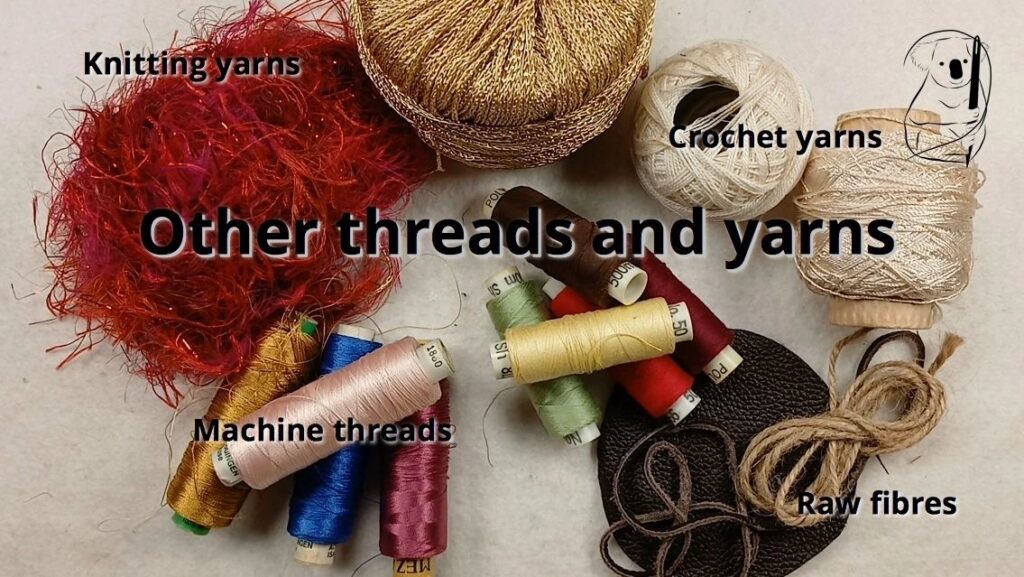
Other threads and yarns
There is a world of other threads and yarns out there that can be incorporated into your stitching. Simple machine sewing thread can be put together to give a similar appearance to stranded floss. This thread is twisted much more tightly than hand embroidery thread, and will look different on the fabric to stranded floss.
Rayon machine embroidery threads are very fine and take a lot of stitches for any coverage when used by themselves, but they combine beautifully with other threads. In our Bullion knot project Peyton, we combine one strand of rayon machine embroidery thread with two strands of cotton floss in two colours. The resulting blend of colours works well with the pattern of the top.
There are many natural fibre threads available that we haven't discussed here. Linen and hemp are available in both sewing and embroidery threads. Their colours tend to be more natural than the brights of the cottons and silks. Rough hemp can bring a rustic note to your stitches.
Leather thong would be suitable for decorative stitching on casual shoes or bags, drawstrings, loops for corset wear, or simply decorative finishes on garments to provide a hippy look, perhaps with fringing. If you would like to make your own leather lacing, see our video for Casey, a small leather coin purse.
Knitting yarns offer many possibilities for inclusion in surface embroidery. The hardest part of using some of these yarns may be finding the right needle. Couching is always a great option for incorporating thicker yarns that are difficult to pull through your fabric.
Thread FAQs
What does S and Z twist mean?
One of the ways to differentiate between threads is the direction of their twist. Described as S or Z twists, the twist follows the diagonal of its namesake. Does this matter? Yes, it does. Most hand embroidery threads a made using an S twist, which means that most instructions are made with the assumption that you are using this thread. And for most stitches, there will be little difference in how the stitch looks on the fabric. There are, however, some exceptions where there is an obvious difference, and if you know about it, you can make a decision about how you would like your stitching to look.
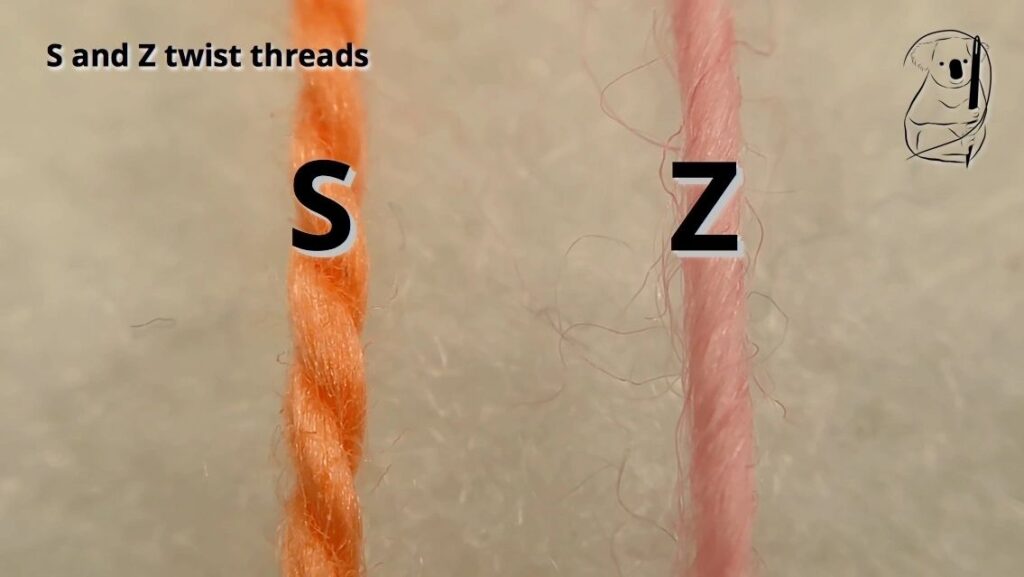
The big one here is Stem stitch and Outline stitch. These two stitches are made with the same action, the difference being where the loop of thread is held as you stitch – above or below the line of stitching.
If you stitch a line of Stem stitch with an S twist thread with the loop below the stitching line, it will sit with the threads in a rope-like manner, as the twist keeps the stitches apart.
But if you stitch a line of Stem stitch with a Z-twist thread with the loop below the stitching line, the stitches tend to blend into each other, and it becomes Outline stitch.
Fun hey? And there are also differences for left- and right-hand stitching. See our video on Stem stitch for a quick demonstration of how the direction of the twist can affect the appearance of the stitch.
Apart from these two examples, stitches that require wrapping can also be changed or affected by the thread twist direction. Bullion knots are at the top of this list. How much difference will depend on the thread itself. If in doubt, test the stitch and thread on a practice piece first.
As noted, most embroidery threads have an S twist, so it is when you start incorporating other threads and yarns that you might find Z-twist threads in your workbasket.
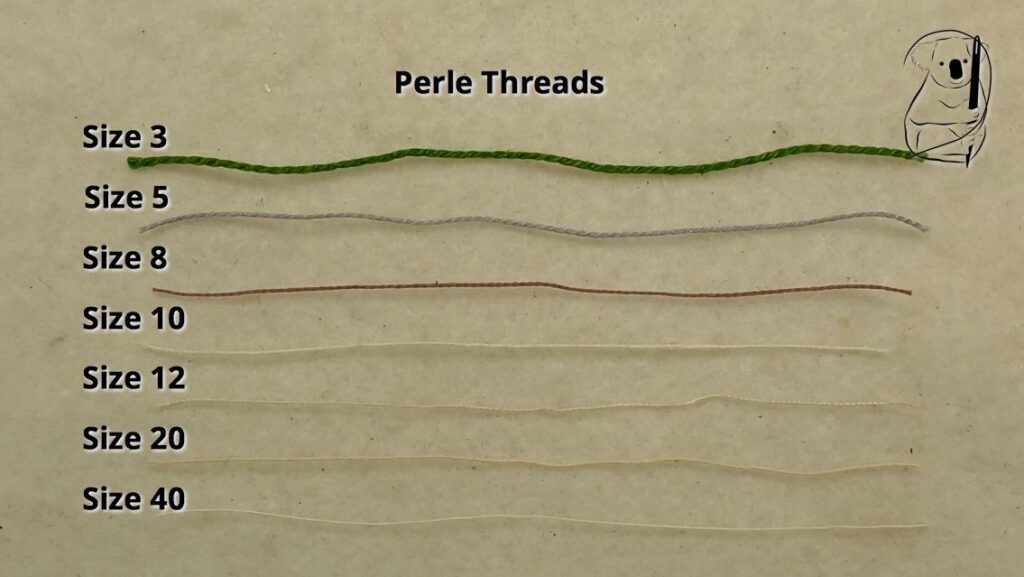
What is thread Weight?
When a thread has a number in its name that is not related to the colour, it usually describes the thickness or weight of the thread.
The higher the number, the finer the thread. For example, Perle threads vary from very thick - #3, to very fine - #40.
Some threads are described in terms of ply. This is a common term that applies to knitting yarns, where the thickness of the yarn increases with the number of ply twisted together.
For example, 4 ply yarn is finer than 8 ply yarn.
How do I get the same colour I used before, and what are those numbers?
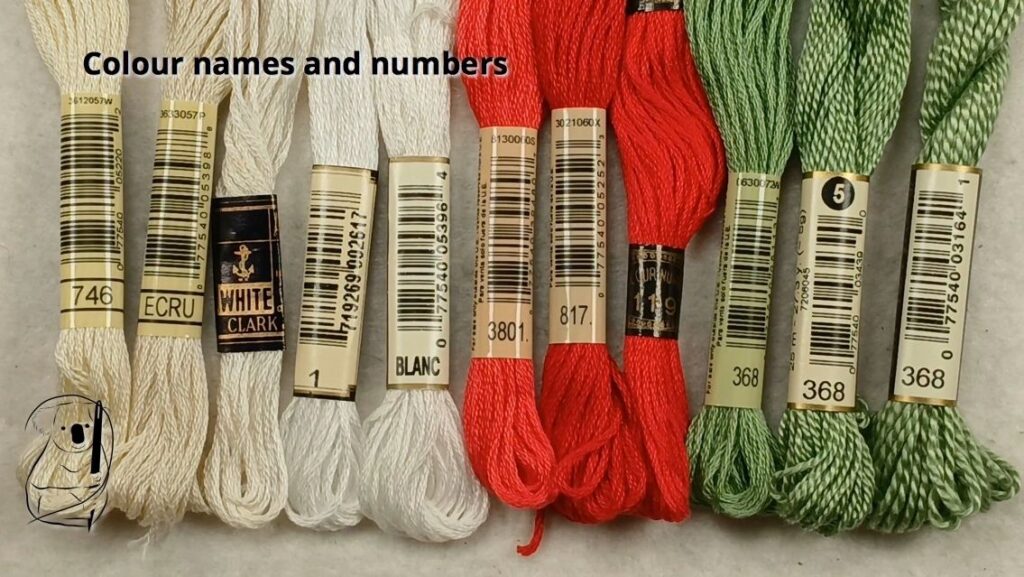
For many manufacturers, the thread colour does not have a name, but is identified by a number. These numbers will not match between brands. If it is important to match a thread colour, stick to the one brand.
Each manufacturer will have its own numbering system, however, these should be consistent within a brand. For example, DMC Perle Size 3 shade 368 will be the same colour as DMC Perle Size 5 shade 368 and DMC Stranded Cotton shade 368. Not all thread colours will be available in all thread varieties or weights, even within the one manufacturer's product range.
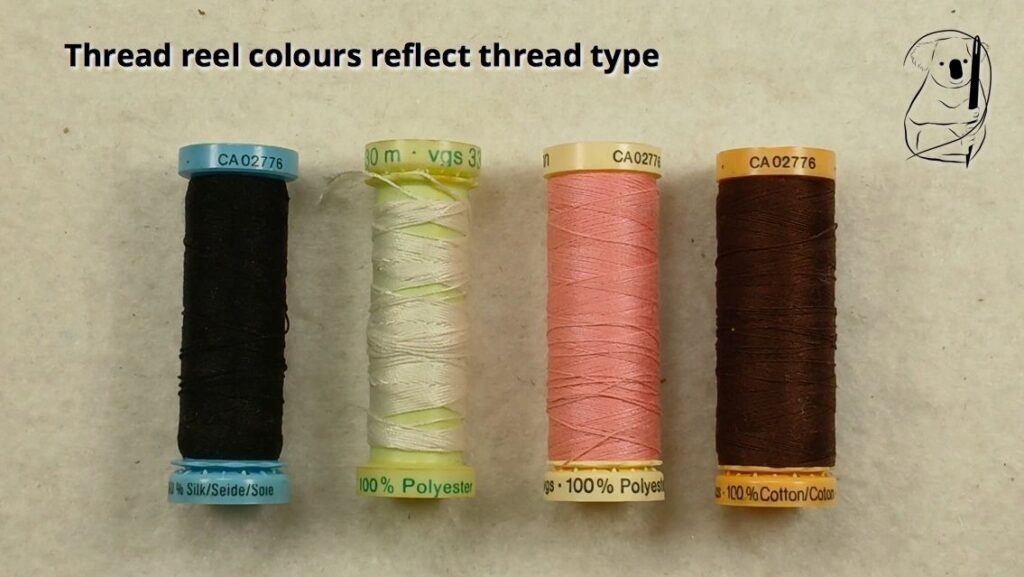
How are thread reels labelled?
When looking at threads displayed at your local store, did you ever notice that the reels are different colours?
Guitermann thread spools are usually cream for normal sewing thread. Upholstery threads come on grey spools.
While you might not want to memorise the list, just being aware that there are simple flags for thread purpose should help with thread choice.
Do I have to use the thread for the use specified?
Just because the label says Upholstry thread, does not make it exclusively so. Stitching in leather work uses a coarse strong thread quite often made of polyester. For domestic use the easiest option here is upholstery thread from your local haberdasher. This thread is very strong and comes in a reasonable number of colours.
Are all threads created equal?
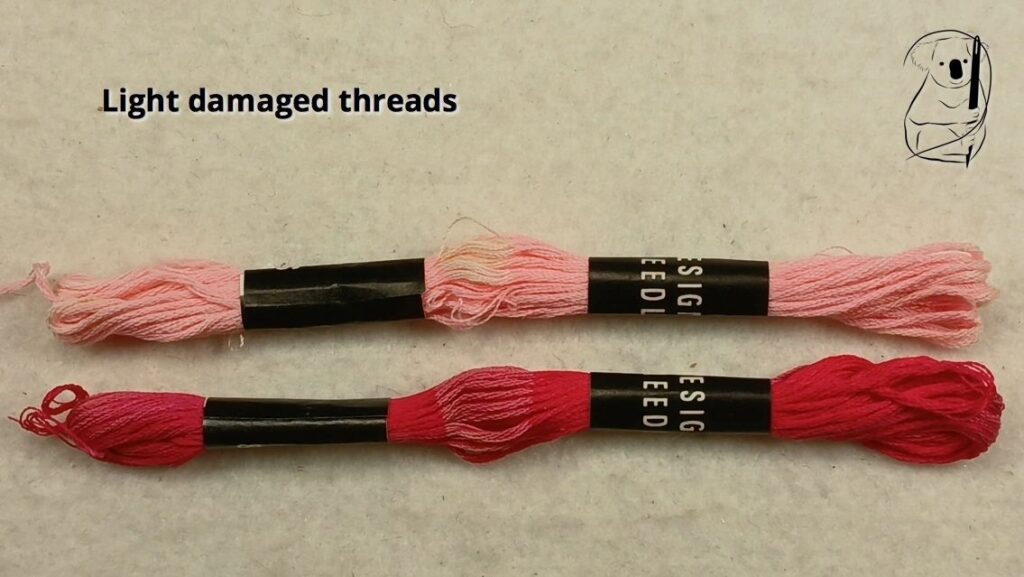
Like any other product, the quality of a thread will vary depending on manufacturing. Between the specialist thread producers, the thread is expected to be of a stable and high quality.
Cheaper alternatives may not be colourfast, or they may not be as soft as their more expensive counterparts.
So, which thread should I use for my stitching? That is both easy and difficult to answer.
Like artist’s brushes are designed to perform in specific ways, many threads have been designed for specific stitching tasks, so use the thread for the task it was made for.
But in a world of freeform embroidery and textile art, you are welcome to make and break your own rules.
So, if you are approaching stitching as a beginner, or using a thread type for the first time, have a look at the projects usually completed with this thread. Read the manufacturer’s instructions and recommendations. And of course, there are many experts out there who focus on a specific type of stitching and its associated thread uses. Once you understand what a thread is designed do, you can then explore what else it can do for you.
And in the end, it is all about the pleasure of making the stitch, of needle pulling thread, so you can also be guided simply by what makes you happy.
Watch our video Thread, Threads, Glorious Threads on YouTube
Find our Stitch Library playlist on YouTube for easy to follow stitch tutorials to get you started with your creative journey.
Our Projects playlist on YouTube showcases many of the threads discussed here, or you can visit our Projects blog page.