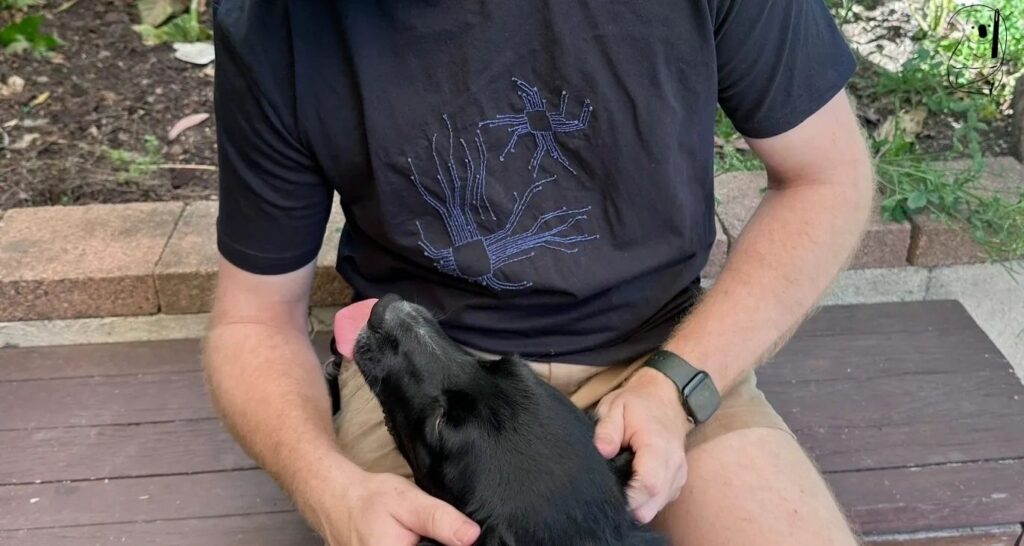
Here is a unisex geeky T shirt using just of couple of stitchesw - Stem Stitch and Colonial Knots. This is an easy project to complete for the beginner. Lets run through how this one is accomplished to ensure your achieve the best results from your work.
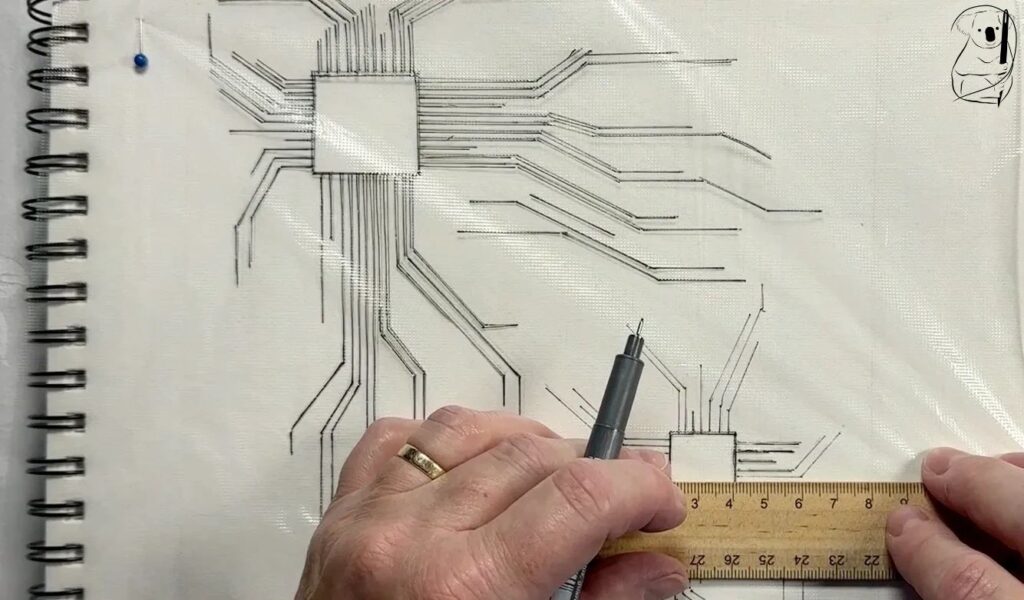
The pattern which is available for free on this website in our Resources Section, is comprised of simple straight lines with a few bends. I decided to use a Stem Stitch for these fine lines as Stem Stitch needs only 1 strand of cotton at a minimum. Split Stitch for example would require 2 strands of cotton minimum. I wanted these lines to be as fine as possible. For the Colonial Knots, I used 2 strands of DMC cotton,
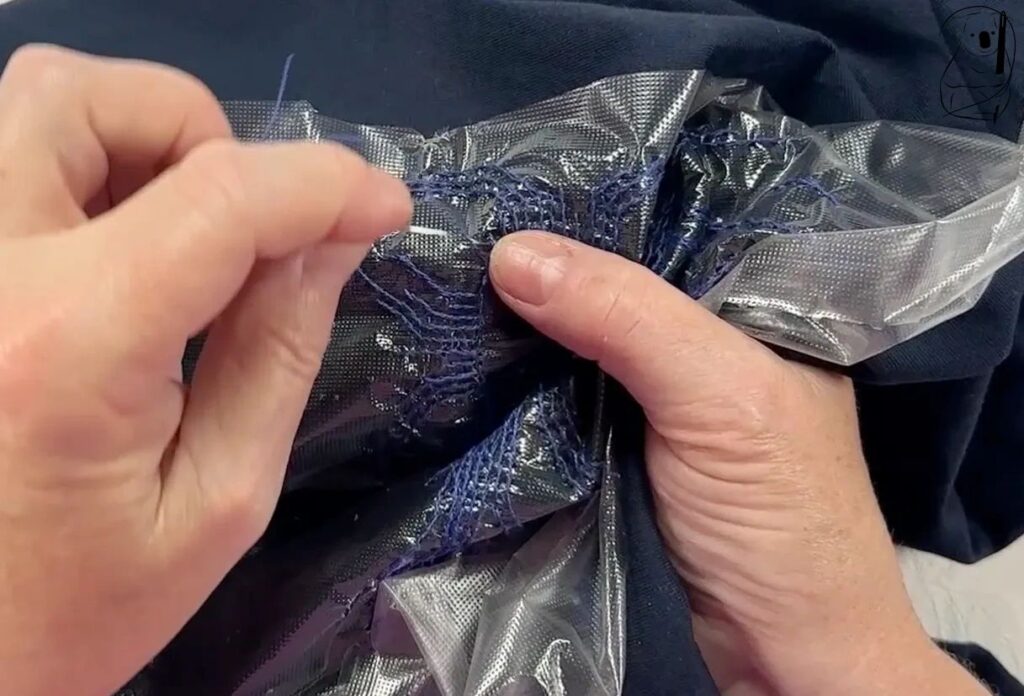
The pattern was transferred to the fabric of the T shirt using transparent dissolving parchment. I made this decision as I wanted really fine lines on the pattern and the pigment pens seemed to be the best option for this purpose. The transparent solvy allows for very fine lines whereas the fabric type solvy provide a much thicker line of marker pen ink. The pattern was then pinned to the T shirt slightly off centre to reflect the asymetrical nature of the pattern. One side of the pattern is more dense than the other.
After pinning the pattern to the T shirt. I commenced the Stem Stitch lines and completed all the stem stitch before starting the Colonial Knots.
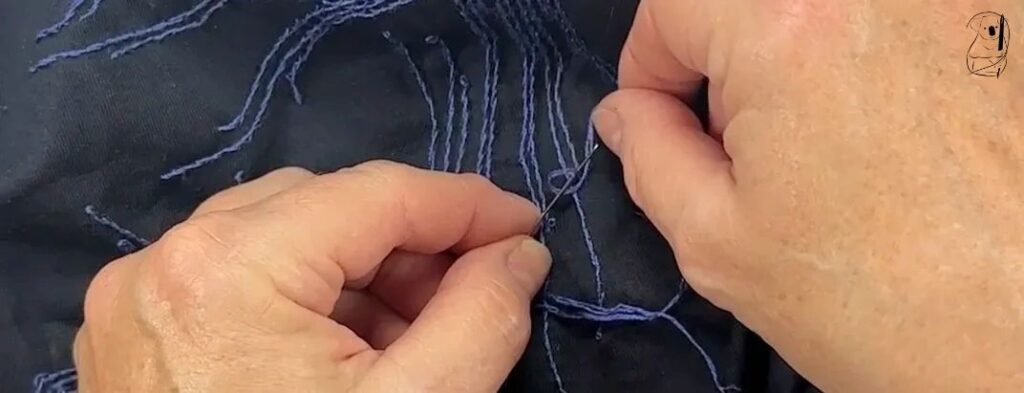
If you watch the video, you will see that my left handed Colonial Knots are formed back to front from the normal right handed stitches. These knots are very easy to make however in hindsight I should have stitched the Colonial Knots when stitching the straight lines. Finishing this detail at the end of the project meant that most of the knots were a single stitch with a starting knot and finished knot at the back of the fabric with no carrying the thread to a next stitch. This meant extra work for me and extra knots at the back of the work.
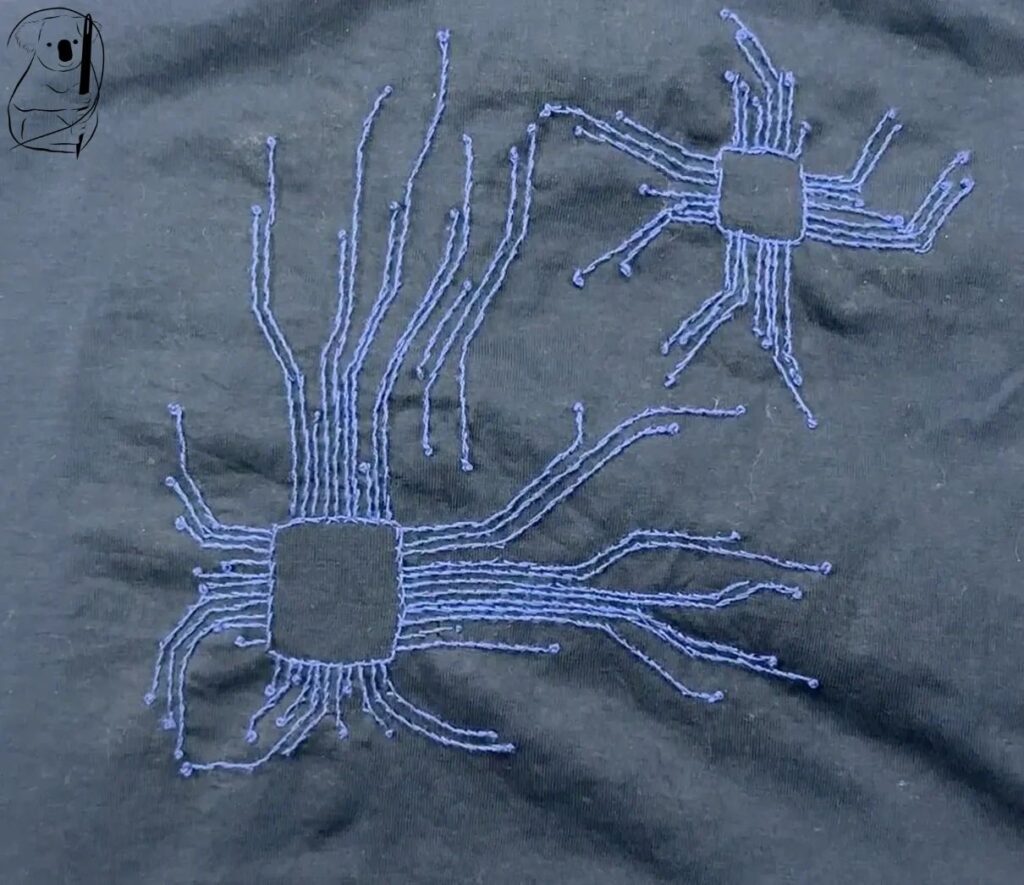
After finishing this project, would I consider any changes?
I must say that following a pattern in black ink on a dark navy background was pretty difficult. If you have trouble seeing the pattern in the video, well you are not the only one. Next time I try this method of transferring a pattern, I will be more mindful of my background colour. It was not impossible to work with these 2 colours, but it was difficult.
I also have regrets about the pattern itself. I think the issue in the design is its spacing. There is just too much empty space here. The electronics inside a computer have almost no empty space at all. I do like this idea as most of us have computer enthusiasts in our lives who would really appreciate this idea. So I do plan to rework this design to overcome this design flaw.
I also started this project with some thrifted thread which was an ideal colour but definitely not my usual DMC cotton. I actually ran out of the thread about 3 Colonial Knots from the finish so purchased the DMC equivalent colour to finish it off. It is a bit of a gamble to start a project with some thread from your stash, not knowing exactly how much you will need and how much your actually have. In this case I was just unlucky. However the quality of the thread I had was definitely inferior to the DMC cotton, and I now know not to skimp on quality EVER in this regard. Thread is pretty inexpensive, and the DMC cotton was just easier to work with and looks very good as well. I think I will go through my stash and discard threads which look to be inferior quality.
This project worked up quickly and took just a couple of afternoons. It was simple and used 2 stitches which we have already covered in our video tutorials. I am always looking for ideas which are modern, unisex and beginner friendly. This one ticks all those boxes.
My materials here were
1 T shirt purchase new but could be thrifted
2 My thread was purchase from a thrift store but the DMC equivalent is No 797. I used one strand for the Stem Stitch and 2 strands for the Colonial Knots.
Watch the video of how this project came together on YouTube.